Jan 28, 2014
Articles and Lectures on Libertarianism
Robert Wenzel runs an excellent (and addictive) blog called EconomicPolicyJournal.com, which has published a few very good lists of lectures and articles which can help one develop an understanding of libertarian philosophy:

Jan 2, 2014
Timeless Absurdity
Today I am sharing an interesting letter posted on a blog called The Art of Not Being Governed which shows that the "Support the Troops" mentality is nothing new, and highlights the danger posed by such non-thinking:
An Open Letter From a Soldier, To Those Who Criticize The Troops
Does this sound familiar?
If you are like me, you were mentally preparing your rebuttal as you read the first half of the letter- only to realize that this soldier wasn't stationed in Guantanamo, he was likely stationed in Auschwitz! This letter could be satire. Nonetheless, all the "justifications" the author used- "duty", "protecting our way of life", preservation of "freedom", bad guys who seek to do harm, providing for his family in a poor economy, etc.- are constantly reasons used by US troops when discussing why they enlist in the military.
Such rationale is as illogical as it is timeless. Although the arguments for soldiering can appear to have validity for the casual observer, they fall apart altogether upon even an inkling of perusal. It is too bad such scrutiny seems to be beyond consideration for the hoards of people volunteering to partake in death and destruction, and those who "support" them.
An Open Letter From a Soldier, To Those Who Criticize The Troops
To whom it may concern:
It has come to my attention that many people have been directing some of their anger about our country’s foreign policy toward the members of the military themselves rather than to our political leaders who dictate what our policy is.
As asolider[editor's note: typo] soldier, this saddens and upsets me. I joined the military not because I agreed with the politicians, but because I felt a duty to serve our beautiful country and noble people. Our way of life is worth protecting, and it requires that men like me make personal sacrifices so that others don’t have to. Freedom needs to be preserved and protected from those who seek to destroy it, and they are legion. The modern world is complex, and what we have here in our country is attractive to despots, terrorists, tyrants, bolshevists, and religious extremists. They will use any means possible to enslave and control us.
I don’t want to spend my life in the military. I never really wanted to join in the first place, but the economy was such that there simply weren’t any other options that came close to providing the benefits, pay, and security for my family. I have children, and I did what I had to do to make sure they had food on the table and a warm place to sleep. I joined the military so they won’t have to. I want a better life for them, and the surest way to provide that is through national service.
If you haven’t served in the military, you won’t be able to understand the evil that exists outside our peaceful borders. I’ve looked into the eyes of our enemies. I’ve seen the atrocities they commit. I’ve heard their anger. The peace and tranquility you experience at home is the result of the willingness of brave soldiers to pursue evil wherever it takes hold.
I do not mean to say that our soldiers are perfect and always honorable. Of course there are mistakes. Of course innocent people die, and it is always a tragedy when they do. But we do our best to minimize those deaths as much as possible. Sometimes those deaths are out of our control. We don’t always know what is behind every door, and we can’t afford to assume the best of every situation.
Some have criticized soldiers for their willingness to imprison our enemies without trial or charges. I have worked at a detainment complex where some of these people are held. I won’t say the name of the facility, but you will no doubt be familiar with it, as it is probably the most famous of this type of detainment center. I know for a fact that some of the people that were held there were innocent of any crime, and I did what I could to lighten their burden. If I wasn’t there, some other soldier could have been there and he may not have been so kind. We had a lot of people come through, and I didn’t always know their fate in the end. That information was above my pay grade. There was nothing I could do about it. I always tried to treat them with respect and dignity. Of course I couldn’t help them escape, because I would have faced disciplinary charges, and they probably would have been found and killed. This would help nobody. From my position I could at least make their lives a little more tolerable.
I’ve never killed anybody; I’ve never even fired my weapon at another person. I won’t follow orders which go against our national principles. I have taken an oath to our country, our flag, and our Führer, and I will not violate that oath.
Now that I’ve laid out my defense of my chosen occupation, let me offer some solutions.
Those who criticize our troops are always welcome to find another country to live in. Nobody is stopping anybody from leaving. Granted, there are certain checks and procedures that need to be followed, but that is only for security; those who have nothing to hide have nothing to fear. Those who get disappeared by the Gestapo are criminals and represent a danger to our pure nation.
If you don’t wish to leave, I encourage you to write to your politicians. They are the ones who make the decisions; they have the power to change things. Our political freedoms allow us to have access to the legislators, and to vote out those who don’t represent the voice of our unified people. We are only their tools and cannot make changes on our own. It is they who determine the orders; we only follow them.
I may not like the stench of the incinerators, I may not agree with every race law, and I may not believe fully in the final solution, but the only reason you enjoy your freedom is that rough men like me are willing to do violence to protect you. It is our willingness to put aside our personal lives, sacrifice our liberties, and deploy to the harshest places on earth that allows you to be comfortable at home, to enjoy the blessings of living in the greatest nation on earth, and to have a peaceful and prosperous holiday season. Don’t forget, as you prepare the Weihnachtsplätzchen this Christmas, that we, the National Socialist soldiers of der Führer Adolf Hitler are away so that you can walk down the Reichsstraße to the Rhine in peace.
Remember the words of our German National Anthem:
Deutschland, Deutschland über alles,
Über alles in der Welt,
Wenn es stets zu Schutz und Trutze
Brüderlich zusammenhält.
Germany, Germany above everything,
Above everything in the world,
When, for protection and defense, it always
takes a brotherly stand together.
Sgt Heinrich Ehrlichmann
Military Post Number 34 539 F
Ukraine
Does this sound familiar?
If you are like me, you were mentally preparing your rebuttal as you read the first half of the letter- only to realize that this soldier wasn't stationed in Guantanamo, he was likely stationed in Auschwitz! This letter could be satire. Nonetheless, all the "justifications" the author used- "duty", "protecting our way of life", preservation of "freedom", bad guys who seek to do harm, providing for his family in a poor economy, etc.- are constantly reasons used by US troops when discussing why they enlist in the military.
Such rationale is as illogical as it is timeless. Although the arguments for soldiering can appear to have validity for the casual observer, they fall apart altogether upon even an inkling of perusal. It is too bad such scrutiny seems to be beyond consideration for the hoards of people volunteering to partake in death and destruction, and those who "support" them.
Nov 29, 2013
Thanks for the Thanksgiving Workers
Robert P. Murphy shared some interesting thoughts about folks who work on Thanksgiving on his blog recently:
Working on the Holidays
While enjoying the wonderful meal brought together for our enjoyment last night, someone predictably chimed in that it was awful that Walmart remains open on Thanksgiving. The implicit (and unanswered) question is: why would Walmart do such a thing? I guess they just are a bunch of money-grubbing scrooges, who wish to punish their employees due to a lack of reverence for the value of family time!
I think Murphy's take on this is worth considering:
In other words, from a purely utilitarian perspective, holiday workers permit many people to travel to see family who could not otherwise do so. (Can you imagine strapping a few extra fuel tanks to your vehicle in order to have enough gas to get where you are going, due to all the fuel stations being closed?) In the case of Walmart, people are shopping on the day of Thanksgiving for one of two reasons:
1. Thanksgiving is a meaningless holiday to them, and they are doing their regular shopping. This means closing up shop would punish them for not celebrating the sacrosanct "National Holiday", in a bizarre form of collective retribution.1
2. They are purchasing items they forgot to buy, or didn't realize they needed until the "heat of the moment". I guess you will just have to live without the stuffing, or cranberry sauce, or whatever else it is that now is unavailable because everyone is closed!2
It becomes clear how strange this perspective of anti-Walmartism is when considering the reality of the issue. However, those against Walmart, do not stop there! No, no...they move even further along this twisted logical path to say it is their duty to boycott the establishment! Of course, that's fine in the sense of boycott being a voluntary measure to take. However, it reveals the insanity of the thought process these folks engage in: to resort to self-denial if it comes down to it to prove they are serious about their concern for these "exploited" workers!
Taking pity on those "poor souls" who are "forced"3 to work on holidays is a way to marginalize them, and is incredibly degrading to these people who stand at the ready to provide products to market at a crucial time when we are all trying to look our best for those who's opinion we value the most. After all, when you forget an ingredient for a dish you are preparing on the holidays, they save you the embarrassment of that dish being voided due to your lack of foresight. Instead of pitying them, perhaps they should be honored. At the very least, these workers deserve our thanks!
Notes
1. The liberal frowning upon Walmart is eerily reminiscent of the conservative Christian logic of forcing one's religious values upon others. Strange bedfellows or birds of a feather?
2. We were fortunate that the grocery stores were open where we live, because we needed several forgotten items to complete our holiday feast.
3. Of course, the employees at these establishments who are open do not "have a gun to their head". That tactic (the threat of violence) is never employed by capitalists, but is always employed by the state.
Working on the Holidays
While enjoying the wonderful meal brought together for our enjoyment last night, someone predictably chimed in that it was awful that Walmart remains open on Thanksgiving. The implicit (and unanswered) question is: why would Walmart do such a thing? I guess they just are a bunch of money-grubbing scrooges, who wish to punish their employees due to a lack of reverence for the value of family time!
I think Murphy's take on this is worth considering:
I think this outrage that we hear every year is oddly selective. For example, should all gas stations, highway toll booths, bus stations, and airports be closed on Thanksgiving? If so, that would prevent a lot of people from “spending the holidays with their families.” Even if your sole criterion were to boost the amount of time people spend with their loved ones, you would need at least some critical workers at their posts on Thanksgiving Day (at least the morning and afternoon).
In other words, from a purely utilitarian perspective, holiday workers permit many people to travel to see family who could not otherwise do so. (Can you imagine strapping a few extra fuel tanks to your vehicle in order to have enough gas to get where you are going, due to all the fuel stations being closed?) In the case of Walmart, people are shopping on the day of Thanksgiving for one of two reasons:
1. Thanksgiving is a meaningless holiday to them, and they are doing their regular shopping. This means closing up shop would punish them for not celebrating the sacrosanct "National Holiday", in a bizarre form of collective retribution.1
2. They are purchasing items they forgot to buy, or didn't realize they needed until the "heat of the moment". I guess you will just have to live without the stuffing, or cranberry sauce, or whatever else it is that now is unavailable because everyone is closed!2
It becomes clear how strange this perspective of anti-Walmartism is when considering the reality of the issue. However, those against Walmart, do not stop there! No, no...they move even further along this twisted logical path to say it is their duty to boycott the establishment! Of course, that's fine in the sense of boycott being a voluntary measure to take. However, it reveals the insanity of the thought process these folks engage in: to resort to self-denial if it comes down to it to prove they are serious about their concern for these "exploited" workers!
Taking pity on those "poor souls" who are "forced"3 to work on holidays is a way to marginalize them, and is incredibly degrading to these people who stand at the ready to provide products to market at a crucial time when we are all trying to look our best for those who's opinion we value the most. After all, when you forget an ingredient for a dish you are preparing on the holidays, they save you the embarrassment of that dish being voided due to your lack of foresight. Instead of pitying them, perhaps they should be honored. At the very least, these workers deserve our thanks!
Notes
1. The liberal frowning upon Walmart is eerily reminiscent of the conservative Christian logic of forcing one's religious values upon others. Strange bedfellows or birds of a feather?
2. We were fortunate that the grocery stores were open where we live, because we needed several forgotten items to complete our holiday feast.
3. Of course, the employees at these establishments who are open do not "have a gun to their head". That tactic (the threat of violence) is never employed by capitalists, but is always employed by the state.
Nov 11, 2013
Support the Dupes
Today is known in the US as Veteran's Day, but before 1954 was known as Armistice Day, the latter honoring WWI veterans and the former a celebration of veterans of all US wars.1 This change came as a result of WWII veteran Raymond Weeks, who hatched the first "National Veteran's Day" celebration in 1947 and led a successful delegation to US President Eisenhower to make the rhetorical change. (source wikipedia)

What I am reflecting upon this year is the notion that veterans of US foreign conflicts are to be "celebrated" at all. What makes this occupation so noble that it is to be honored with three national holidays over the course of the year, and indeed on a daily basis for those who are vehemently supportive of the US military? Anyone who watches sports regularly is indoctrinated constantly with the "support the troops" mentality, as most of these events include military honor guards and sometimes even giant displays of "patriotism." Many times one will encounter a sign in a business to this effect, and more than enough vehicles are pasted with bumper stickers which either say "support the troops" or an emblems which proudly display the branch of the military which the driver or someone they know is working for. Suffice to say, over the course of one's daily life here in the US, it is almost impossible to avoid contact with such propaganda.
However, the question remains: what is it about this occupation which earns it such constant and unquestioned devotion? Why don't we see more bumper stickers which say "support the grocery clerks" and "thank the garbage men"? In fact, try to thank someone who is working at a business you are patronizing for their service, and watch as they give you a blank stare with a confused "you're welcome". Although the services one utilizes in daily life are crucial to a sense of normalcy (having a place to buy food and the removal of garbage) the employees who put forth the effort to make these services available are not revered or honored as heros, much less with giant displays at sporting events such as the photo above. No one sheds tears for the "sacrifice" many have suffered in the service of providing goods and services demanded in the marketplace.
The elephant in the room here is the notion that without US troops engaged in constant warfare, there would be no sense of normalcy. Indeed, the most fervent supporters of the US military often times say that without endless warmongering, "we would all be speaking German"!2 Another popular phrase is "freedom isn't free". Even many who are emphatically anti-war will concede that they support the troops, especially in light of the bad treatment many Vietnam War veterans received upon return from that war. However, in order to investigate the validity of the these claims (that without perpetual war and interventionism in other nation's affairs, the US would not be a "free" country- therefore, the troops are engaged in a noble cause and are to be revered), one must sort through this imperialistic philosophy logically and without emotional bias.
In peeling this onion, one must consider the presumption that US military actions are designed to repel enemies who seek to take control and "do us harm". This notion is perhaps as old as time as a plea by rulers to a citizen's sense of security in daily life, thus "protecting the country" is the typical stated justification for those who decide to join the military.3 However, rulers necessarily have a vested interest in maintaining the illusion that its citizens live in the "greatest country in the world" and that any fundamental change in the nature of power would yield undesirable or at least uncertain results. Thus, it is difficult to imagine how rulers could separate themselves from their own interest to maintain power in a benevolent act of purity such as the appeal for the "security of the nation".
Indeed, when discussing matters of foreign policy, intellectuals and leaders incessantly refer to the abstract concept of "our strategic interests and obligations around the globe". This terminology is so pervasive in the rhetoric used by war-mongers to justify various actions, and so rare is the appeal to security of the citizenry, that one must ask, who's "interest and obligations" are they referring to? As those who are mere citizens do not typically oblige themselves to matters in other nations, it is apparent that the power structure of the nation has simply postulated this concept on its citizenry. Clearly, when referring to these conflicts, the use of the word "our" is more appropriately viewed as not the citizens of the nation, but rather the powerful interest groups who parasitically utilize the citizenry as a source of funding and cannon-fodder to further entrench their control of resources world wide. The "enemies" who are created to justify such intervention are likely just unfortunate enough to have been born in a geographical area which contains something these interest groups seek to exploit. It is hard to imagine how such dastardly ends could be achieved absent the means of the coercive power of the state to extract and subsidize them with financial and human capital.
So, rather than providing a secure life for the citizens of the nation, the role of the soldier is, in actuality, to provide a secure profit for companies who seek to exploit resources from an area which is currently out of their control. The soldier is also working for what Bob Dylan termed the "Masters of War"- those companies which "build the death plains...(and)...build all the bombs." Committing such atrocities does not "make us safer", rather it increases the likelihood of retaliation by those who are attacked and, thus, is counterproductive in that it makes life in the nation of the warmonger less secure. Soldiers, however unwittingly, are therefore responsible for not only the destruction they participate in while warring, but are in their actions sowing the seeds for future conflicts to arise.
For this reason, those bestowing "honor" on soldiers are really making a mockery of the word. Far more honor can likely be found in the innocent civilians of warring countries, who have been murdered in the hundreds of millions in the twentieth century, and, indeed throughout history by soldiers and their masters. Here's to hoping that in the future, there will be less veterans!
*Published in the 11th hour of the 11th day of the 11th month in hopes for a peaceful future on this planet.
Notes
1. It is of note that the concept of "Veteran's Day" is a redundancy, considering that Memorial Day had been practiced for identical purposes since the mid 1800s. But one can never be too redundant in honoring "those who served."
2. Lately, some trade the word "German" for "Arabic" as an attempt to stay fashionable with the current "enemy".
3. However, many of the enlistments after 9/11 were not embarked upon in an attempt to "protect the nation" from an enemy that was perceived to be a threat to actually overthrow the US government. Indeed, the idea that Muslim terrorists could undertake such an action would have been, even at that time of great chaos and confusion, a silly notion. Rather, many of these enlistments were undertaken to participate for the ignoble cause of revenge.
Nov 9, 2013
Thomas Woods Speaking to NullfyNow NC
Tom Woods gave a great speech to NullifyNow NC recently that is great for those who already have a grasp on the concept of state nullification:
Tom Woods NullifyNow NC
In this speech, Woods focuses on combating the popular notion that the US is simply "one giant blob" (his words) by giving historical examples which show that the opposite is true- that the US was simply a "collection of societies" which agreed to a compact. This culminated in the founding of a limited federal government by the states, and provides credence to the philosophy that when the federal government steps outside of the powers granted to it, the states have the duty and the right to interpose on behalf of their constituents.
This concept, although conceived and popularized long ago, has obvious contemporary relevancy, and is currently being used in many states to combat federal laws that constituents find reproachable. Examples can be found in state-level opposition to national health care, gun laws, and marijuana laws- all issues which are either expressly or implicitly outside the purview of the federal government. Nullifying federal laws is a bold step to take, and states who do so should be applauded for having the courage to stand between the federal government and the constituents they represent.
Oct 11, 2013
Detroit's (Wonderful) Lack of Governance
Lew Rockwell's interview of Karen De Coster, who has been chronicling the downfall of the city government of Detroit (and subsequent anarchy in the city) via her blog Detroit: From Rust to Riches, was both entertaining and informative. Traveling the city by bicycle, she has a unique perspective of the nuances of how people live in a situation when the government crumbles and becomes insolvent and, thus, irrelevant. The blog is always a fascinating read, and Karen is a great photographer, to boot! My ears perked up when Lew asked about the city's approach to solving its fiscal disaster. Karen's answer:
Not a whole lot is known yet about the specifics of the bankruptcy...As you can imagine, the biggest battle has been with the entitlements in the city. The unions and, of course, the pensioners that are promised lifetime pensions, lifetime insurance, lifetime on the doll everything...the biggest battles that you see publicly right now are the unions here battling for the largesse. @ 7:25
In reality, the city is insolvent. We have been riding an unsustainable insolvency for a number of years (like a lot of other cities, by the way), and it was about time that the bubble break. @8:14
She also makes an interesting comparison between Detroit and Chicago's relative crises when Lew points out that Chicago is in even deeper trouble:
I'm not sure a financial comparison can accurately be conveyed...You know, Chicago has a much, much more...an organized government. They have a very deeply rooted bureaucracy. Detroit is not quite so deeply rooted...our ineptness here in terms of the government and their ability to get everything done has really enabled this anarchistic environment.
(In) Chicago, things are going to be a lot more difficult. You don't see people flocking to Chicago to do these sort of things because it's a very rigid bureaucracy. A lot of politically powerful people have run the city for years. @ 9:15 (emphasis mine)
A fundamental observation that can be drawn from Detroit's crisis in governance is that the market is an all encompassing phenomenon, which always lingers, waiting for its moment to spring up. That is to say- human nature compels us to trade with each other to achieve a harmony of desires. Even if a public institution has monopolized a service, the moment that the monopoly cannot be enforced is the window of opportunity for entrepreneurs to step in and satisfy market demand (if it exists). In this sense, entrepreneurs are the personification not only of human desire but of human nature itself.
An interesting difference between public and private organizations is the fluidity of the environment in which each of them operates. Private businesses must respond adequately to the needs of the customer, or risk failure. If insolvency is inevitable, the business has a financial incentive to fold sooner rather than later. This is the seed of mergers, acquisitions and partnerships, as people try to find the right formula to better satisfy market demand. Thus, the marketplace is always changing to meet the desires of the most people possible.
While private enterprises may come and go, public organizations are much more stationary social institutions with no competition. As in Detroit, governments are unlikely to take corrective action when pursuing an unsustainable course, as input from various factions and interest groups dictate decisions rather than the more accurate guidance of profit and loss. Because of the inevitable broken promises that result from insolvency, reorganization of public institutions cause much greater social chaos than private businesses.
While public institutions and their traditions may seem unalterably entrenched, history has instead been a constant weathering away of authoritarianism in its various forms. Contrarily, private entrepreneurship and trade have been only truly inevitable consequence of human nature. The foundational need to satisfy one's desires ultimately trumps any attempt to intervene by outside forces.
Sep 22, 2013
WWIII is a Virtual War
Although many have contemplated the possible triggers to WWIII, it seems that it has been happening both before our very eyes, and out of sight for a long time now. The various conflicts, actions, and world shaping affairs- the stories from the front lines- have not been in the headlines for the most part as in previous (open) wars. Rather, they are buried, under reported, or go unmentioned by the typical media outlets who shape the opinions of the masses and, thus, escape the tangible thoughts for the average person. However, these events continue to play themselves out all over the world- with real consequences. As technology has improved, so has the ability for the U.S. government to assert its control over the affairs of other nation- increasingly with less reliance on troops being present. The current crisis, Syria, is but one battlefront in this war...
It should go without saying that I am in opposition to the U.S. government meddling in Syria in any way, much less an outright slaughter via missile strike as is being contemplated right now. Although the government is insisting that the correct course of action is "punishment" of the Assad regime, it is impossible to gain the moral high ground required to justify such a nanny mentality. For, even those who believe the claims 1 that the Syrian government is responsible for using chemical weapons to gas more than 1000 people to death cannot deny that the U.S. drone program has murdered at least three times as many people. Murder is murder- conventional, chemical, nuclear, from your immediate vicinity or from afar and out of sight- and the U.S. government has far too much blood on his hands to be taken seriously as humanitarians here (or for that matter, anywhere).
John Kerry has said, "This is not the time for armchair isolationism. This is not the time to be spectators to slaughter." Kerry's statement is absurd considering the U.S. government has engaged in covert training and supplying arms to the rebel opposition in Syria for months now- support that has likely resulted in far more deaths than would have otherwise occurred absent outside intervention. The use of the word "spectators" implies that you aren't already playing, and surely you are not already on a team!
Further, the rebel groups who are on the receiving end of such assistance are not "angels of men" with the only purest of intentions. The U.S. government can choose a side to be on, but it cannot fundamentally change the people engaging in the conflict. The rebel groups have committed some incredibly heinous acts themselves, and may well have used chemical weapons. Indeed, it seems U.S. policy is not to be "spectators to slaughter" but, rather, to encourage it.
The way the Syrian conflict has played out so far is perfectly in line with what John Perkins describes in his book, Confessions of an Economic Hit Man. We cannot be sure, as of yet, what was the true cause for intervention and how the initial stages of action played out (coercion and bribery), but the U.S. government has been engaged for months in actively supporting the overthrow of the Syrian government. We are now witnessing the final stage of the process- military action. Notably, this only occurs (according to Perkins) when all other options have been exhausted. It makes one wonder what Assad really did to upset the powers that be!
Therefore, what seems like a sudden escalation in Syria is, in actuality, a process that has been in play for a long time. Indeed, what Perkins describes in his book has been confirmed by the CIA recently when the agency released documents that- for the first time- publicly admitted the agencies role in the 1953 overthrow of Iranian prime minister Mohammad Mosaddegh. Most of the world is in one stage or another of the process, and it would behoove the average American to remember the rash of assassinations that occurred in the U.S. during the 1960s. Perhaps even the United States is not out of the range of the United States government! 2
The actions of the U.S. government have been so destructive, and so obviously designed to enrich or protect the well-connected 3 that it is amazing that this example could play itself out, time after time, without any meaningful change of course. However, in most cases, the contemporary "average American" has not been burdened with the effects of war costs to a great degree since WWII because the money is printed and costs are spread out over time. If the financial burden of war cannot be felt, the only connection possible for the average person is via a submissive media- a truly virtual experience.
Even war itself has become disconnected with contemporary use of drone aircraft, and in the skirmish at hand there are -so far- no calls for U.S. troops to set foot on Syrian soil. The "strike" is to be carried out by firing rockets from far away with the push of a button. This approach to the inevitable final stage of the process of force is what Dr. Robert Pape has called "off shore balancing." His strategy is designed to combat suicide terror by removing the foreign troops from the scene of the crime, preferring to obliterate from afar instead. 4 The anticipated approach to be taken by the U.S. government seems to follow Dr. Pape's advice, and removes the aggressor to a faraway location.
I submit that the threat or application of force to achieve a desired political outcome- regardless of proximity- is the very definition of terrorism, and to engage in such activity can only cause justifiable resentment and blow-back from those on the receiving end of such measures. Pape has proven this to be true in his research by revealing that suicide terrorists do not attack because of fanatical religious or social philosophy (as propagated often after 9/11). The fundamental cause, in fact, is resentment for outside attempts to control their society. 5 A great deal of peace would result if the most aggressive control freaks the world has ever known- the U.S. government- were to cease the policy of intervention immediately!
However, because these operations are occurring mostly without the knowledge of the general public (and even when revealed, are carefully massaged to represent an acts of justice and heroism), it is unlikely that a political sea change will occur to stop the interventionists from pursuing the domination they so desire. Indeed, the 20th century was characterized by the U.S. meddling in foreign affairs practically unabated for 55 years! If this empire will not be stopped politically, it will eventually come economically, as has been proven by all empires throughout history. It is only a matter of time...
1. Remember Iraq? Dennis Kucinich has raised some very interesting questions regarding Syria in this article.
2. The proper blame would reside in the various forces in control of the U.S. government...rest assured this does not mean you and I! See Murry Rothbard: Wall Street, Banks, and American Foreign Policy (Free PDF from Mises.org)
3. See #2
4. I discuss Dr. Pape's approach here.
5. See Dr. Robert Pape and his presentation, Dying to Win (Part 1, Part 2, Part 3, Part 4)
Dr. Pape contends that this control is manifested in physical presence. However, I maintain that even a virtual presence via threats and actions from the U.S to influence policy (terrorism) will not remove the fundamental antagonism to those who live where said control is attempted. Thus, his strategy cannot lead ultimately to peace.
Sep 16, 2013
A Plea for Sanity From Liberty Study
Vladimir Putin recently wrote an op-ed piece in the New York Times regarding the threats the U.S. government recently levied against the Syrian government:
A Plea for Caution From Russia
Lew Rockwell blogged a great response to this article. Here, Rockwell exposes the true nature of "American exceptionalism" in practice- aggression against governments who don't conform to standards that the U.S. government puts into place until they do conform or until they have been removed, and can be replaced with a more compliant set of rulers:
"...his NYT op-ed is better than anything to come out of the White House in some time. And he is right, though he is a nationalist himself, about how the world views American exceptionalism. This is the doctrine that the rules that apply to others, and are brutally enforced by the US on others, do not apply to the US. According to this notion, the US has the right to rule the world, and to attack anyone anywhere in pursuit of that goal, using any weapon, including depleted uranium, white phosphorous, agent orange, napalm, mass starvation, etc. Not to speak of atomic bombs."
As this strategy plays itself out continually, the U.S. government becomes increasingly exposed, both morally and economically, perpetuating the inevitable decline that must follow extravagances such as being at war for an entire century! As Chris Rossini points out:
The Fed has made it to 100 years, and the Military Empire can be traced back to the Spanish/American War in 1898. Or if we're really nitpicking, when Lincoln's North invaded the South. In any case, both ideas of Empire & Central Banking began roughly at the same time. This is no coincidence, since The Fed finances The Empire. The former is the beating heart of the latter.
But what have been the results of this seemingly endless source of control in the world? Has the light cast off the "shining city on the hill" brought the nations world out from the darkness of despotism, and yielded a century of peace? Putin correctly points out that this behavior has, in fact, had the counter-effect of creating instability in the world:
"It is alarming that military intervention in internal conflicts in
foreign countries has become commonplace for the United States. Is it in
America’s long-term interest? I doubt it. Millions around the world
increasingly see America not as a model of democracy but as relying
solely on brute force, cobbling coalitions together under the slogan 'you’re either with us or against us.'
But force has proved ineffective and pointless. Afghanistan is reeling,
and no one can say what will happen after international forces withdraw.
Libya is divided into tribes and clans. In Iraq the civil war
continues, with dozens killed each day. In the United States, many draw
an analogy between Iraq and Syria, and ask why their government would
want to repeat recent mistakes."
Furthermore, the logical result of this type of bullying stimulates an arms race, as countries seek to protect themselves against potential aggression. Putin again:
"The world reacts by asking: if you cannot count on international law,
then you must find other ways to ensure your security. Thus a growing
number of countries seek to acquire weapons of mass destruction. This is
logical: if you have the bomb, no one will touch you. We are left with
talk of the need to strengthen nonproliferation, when in reality this is
being eroded."
Putin's analysis of the aggressive nature of the U.S. government, and of the effects of U.S. foreign policy is clearly correct. Unfortunately, his solution is to apply diplomacy in these situations and adhere to the United Nations framework, a process that is seemingly intended to be a sounding board for the world's people. Can this type of organization ensure compliance from countries that may seek to violate its proclamations? It has been proven time and time again to fail in this most basic function. The only way to gain compliance from someone who is transgressing these laws is to force them to comply! Now we are back to square one...
The fundamental issue at hand is- as that familiar old phrase reminds us- power corrupts, absolute power corrupts absolutely. If the "power" were to move to an international sphere, we can be assured that all of the ills that the U.S. empire spawned would only be carried out on a grander scale, and- even worse- policies pursued in this context would have the ultimate rubber stamp of "legitimacy" as a UN approved policy. Indeed, the coherent super-state (i.e. the UN, at the moment) is the worst possible outcome for mankind.
Power, like grains of sand in a dust storm, should settle in to its natural state- with individuals making voluntary choices. Removing these giant organizations called "states" from the picture leaves us with many people, all with different motivations, just as we have now. However, the state is a major tool for dominance; when removed from the scenario, those who are intent upon controlling others are rendered largely impotent to achieve such goals by force. Most people do not support violence outright, and (absent coercion) do not participate in such ventures. Naturally, the only way one can attain influence on people without force is to provide utility to them. A much more peaceful coexistence-as well as a much clearer path to happiness and human progress- would neccissarily occur in such a framework for coexistance. It is to this end we should strive.
Aug 27, 2013
What is Anarchy?
Let's start with what it is not! Before seriously considering what anarchy is, my idea of the definition of anarchy was a violent, destructive protest demanding revolution:

The typical anarchist, as I have found, is not someone interested in violence as an actionable tool in any situation. In fact, the fundamental premise of anarchism- that no one should have rule over or molest any other person's property- would logically prohibit the aggressive use of violence! 2 Simply put, anarchism is life "without rule." Although this concept is inherently peaceful and is clearly desirable, a world without authority can seem daunting and overwhelming to imagine. However, a compelling and beautiful case that can be made for an anarchical society- a life based on voluntary interaction of your choosing in all facets of one's life.
As one travels philosophically outward from the concept that each person and everything they justly own is their own property, a consideration of anarchism logically follows. In most areas of your life you have the power to choose what good or service to buy based on price and quality. However, when dealing in areas the government controls, you always sacrifice both. So, even a minarchist- someone who would prefer to "deal" with the government the least- must ultimately reconcile this fact and consider eliminating even the most traditional government functions. The protections that flow from what the minarchist would call the "necessary functions of government" will, in fact, be found to benefit from privatization. This reveals head-spinning implications to contemplate! 3
While practicality is certainly important (even crucial when it comes to the fundamentals in a civilized society)- morality also demands adherence to these principles. For if it is wrong for a thief to coerce someone into handing over their money by pointing a gun at them, it is also wrong when someone from the government makes the same threat. And if it is right for you to be free to choose what restaurant, what coffee shop, what repair station to patronize, it is also right that you should be able to choose from different service providers when it comes to security and justice, disaster protection, and monetary unit. Clearly, coercive acts are impractical and immoral- not just in certain situations, but in all situations! A world without coercion can only be construed as a world without rule.
The question is not, then, upon the practicality or morality of an anarchical society- but of how to achieve such an environment so we can all prosper and flourish. Unwinding the coercive monopoly of government in all of the areas it has asserted its authority is not an impossible task, and the services provided by the government would be provided by someone else. As an example, Dr. Walter Block has worked out a solution when it comes to roads and highways.
This video from The Anarchast goes into the subject of what anarchy is, and what a world in anarchy would look like:
-Notes-
1. Murry Rothbard famously called the government a gang of thieves writ large!
2. However, not everyone is typical, and those who forget this lesson will surely be sensationalized by the State to further the crucial fallacy at hand- that without the government society will descend into chaos, and that anarchism=violence.
3. Thus, the joke- What does it take to get a libertarian to become an anarchist? About six months
Far from the truth, the above image is the caricature that surfaces in one's mind when contemplating anarchy: the unkempt, disorderly, and violent rioter causing annoyance and disruption to peaceful people on a perpetual basis and gangs of thieves marauding innocent bystanders. 1
The typical anarchist, as I have found, is not someone interested in violence as an actionable tool in any situation. In fact, the fundamental premise of anarchism- that no one should have rule over or molest any other person's property- would logically prohibit the aggressive use of violence! 2 Simply put, anarchism is life "without rule." Although this concept is inherently peaceful and is clearly desirable, a world without authority can seem daunting and overwhelming to imagine. However, a compelling and beautiful case that can be made for an anarchical society- a life based on voluntary interaction of your choosing in all facets of one's life.
As one travels philosophically outward from the concept that each person and everything they justly own is their own property, a consideration of anarchism logically follows. In most areas of your life you have the power to choose what good or service to buy based on price and quality. However, when dealing in areas the government controls, you always sacrifice both. So, even a minarchist- someone who would prefer to "deal" with the government the least- must ultimately reconcile this fact and consider eliminating even the most traditional government functions. The protections that flow from what the minarchist would call the "necessary functions of government" will, in fact, be found to benefit from privatization. This reveals head-spinning implications to contemplate! 3
While practicality is certainly important (even crucial when it comes to the fundamentals in a civilized society)- morality also demands adherence to these principles. For if it is wrong for a thief to coerce someone into handing over their money by pointing a gun at them, it is also wrong when someone from the government makes the same threat. And if it is right for you to be free to choose what restaurant, what coffee shop, what repair station to patronize, it is also right that you should be able to choose from different service providers when it comes to security and justice, disaster protection, and monetary unit. Clearly, coercive acts are impractical and immoral- not just in certain situations, but in all situations! A world without coercion can only be construed as a world without rule.
The question is not, then, upon the practicality or morality of an anarchical society- but of how to achieve such an environment so we can all prosper and flourish. Unwinding the coercive monopoly of government in all of the areas it has asserted its authority is not an impossible task, and the services provided by the government would be provided by someone else. As an example, Dr. Walter Block has worked out a solution when it comes to roads and highways.
This video from The Anarchast goes into the subject of what anarchy is, and what a world in anarchy would look like:
Part 1
Part 2
-Notes-
1. Murry Rothbard famously called the government a gang of thieves writ large!
2. However, not everyone is typical, and those who forget this lesson will surely be sensationalized by the State to further the crucial fallacy at hand- that without the government society will descend into chaos, and that anarchism=violence.
3. Thus, the joke- What does it take to get a libertarian to become an anarchist? About six months
Aug 25, 2013
Happy Birthday, Angie!

Today is my wife, Angie's birthday!!!
Thank you for your patience and understanding, and all of your contributions to my study of Liberty. I hope you have learned from me as much as I have from you!
Jul 14, 2013
With or Without You
For those who believe that without the State, there would be people dying in the streets- I offer the following story...
A co-worker at the local business was riding his bicycle to work the other day, when a car pulled out in front of him. He had very little time to hit the brakes and slammed right into the side of the car, landing on top of his bike. Of course, someone called an ambulance, but my co-worker refused the ride (although I cannot be sure of this, I wonder if he was trying to avoid the outrageous price). Interestingly, anyone can call an ambulance for you, even without your permission- and they don't get the bill! Suddenly, you find yourself being persuaded that it is a good idea to get in and take a ride "for your safety." Thankfully, he had the presence of mind to think for himself. He ended up walking his bike to work...
When he arrived at work, he was in obvious pain. As word spread about what had happened, the owners eventually found out- and insisted on taking him to go to the hospital. He found out that he had a deep bruise on his shoulder, but that he was going to be okay.
Now, can you imagine if my co-worker had instead ridden in the ambulance? Perhaps it seemed like a reasonable thing to do after such a crash, but it would have been very costly for something that is truly not life threatening. About a week later, he is doing fine, and I am sure he is glad to have avoided the bill he would have received for such nonsense treatment.
Jul 4, 2013
The Global Panopticon
The recent public revelation that the U.S. government is officially tracking everyone via
cell phone calls, email, internet activity (certainly blog posts), etc.
was not a surprise to me, because I heard about it probably at least a
year ago or longer from several different sources. If I am not
mistaken, Alex Jones had on a
guest a long time ago who discussed how he was setting up the
infrastructure at AT&T for these NSA spying programs. Gerald Celente mentioned this likelihood over a year ago in his newsletter, Trends Journal.
However, at that time if one were to discuss this idea that the government is tracking everything you do, people would look at you like you were literally wearing a tin-foil hat! No more! Now it is right out there in the open...but why?
The mainstream news outlets (in true Pravda fashion) regularly bury or fail to report stories that are embarrassing to the government- but, for reasons we will get into, this story has become ubiquitous. In other words, you hear about it over, and over, and over. Of course, the story is framed in such a way to distract from the crucial issue of government surveillance. The spying is but a subliminal part of the story, while we are to focus on the other, more benign aspects which make for "compelling" entertainment reporting. The manipulators of public opinion are clearly up to something devious- a subtle propaganda campaign designed to make it a part of public consciousness that everyone, everywhere in the world is being watched.
The effect is similar to what we see from the TSA at airports. This agency herds people into lines, and gives them a choice to either let a stranger view their naked body or submit to a full pat-down. What could be more dehumanizing, and humiliating than this degrading act? The common person says, "Well, I have nothing to hide, so who cares?" However, the psychological damage has already been done.
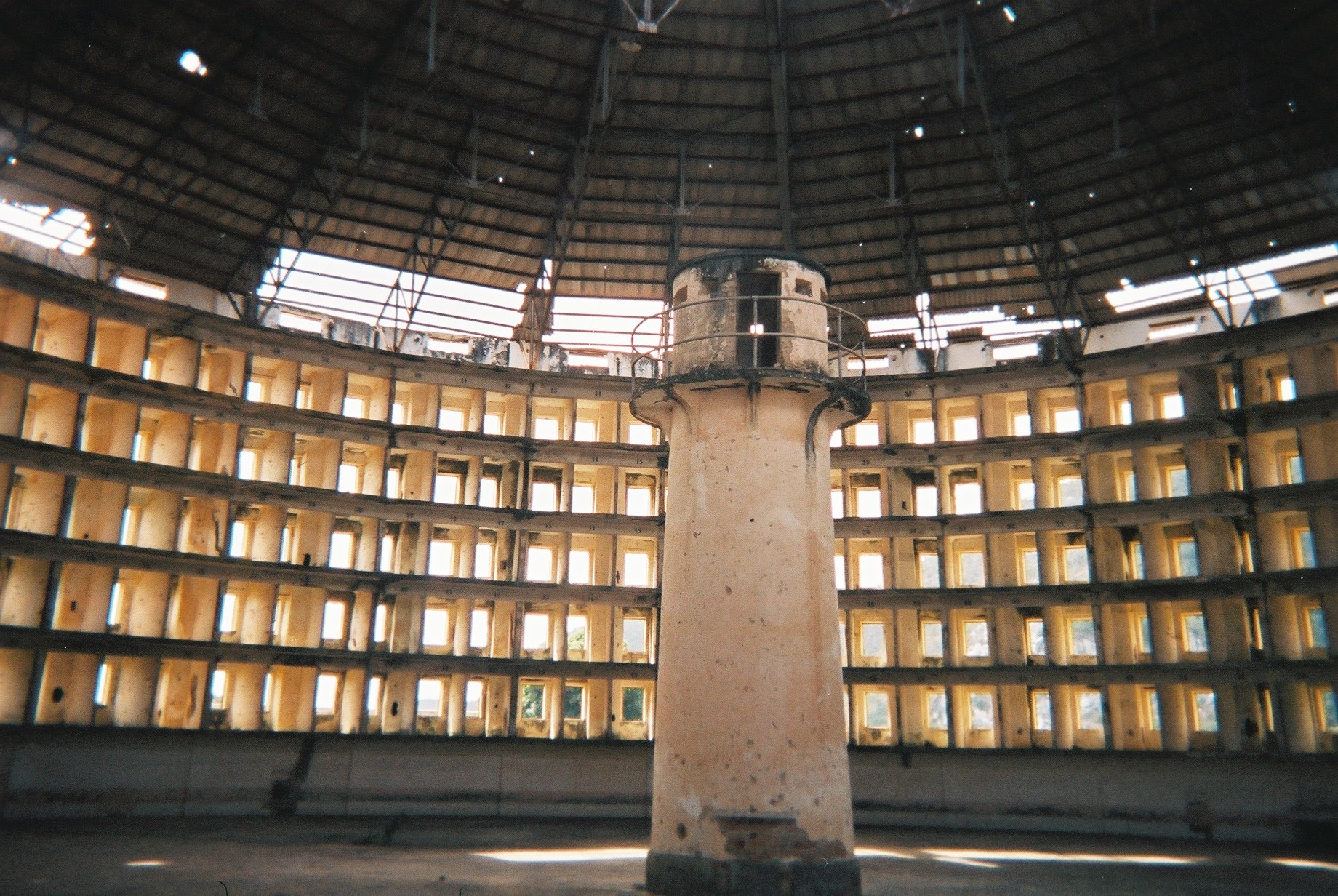
The open admission that the U.S. government is gathering all data it can possibly acquire domestically and internationally on ordinary people has created a global panopticon. It is like a constant body scan or pat-down every time someone communicates- we are all now naked before our masters, and we know it. This moment, the death of privacy, is an important milestone in the march toward tyranny- now everyone in society is aware of the intentions of the regime- total control.
One positive aspect of this shift in consciousness, is that there can be no more denial of the totalitarian intentions of the U.S. government. No longer should we have to endure the eye-rolling and dismissive attitudes of those who are interested in talking politics only if one stays safely within the John Boehner/Harry Reid paradigm.* This is the opportunity to open the lid on that box, and guide many people to a new perspective.
*Thanks Tom Woods
However, at that time if one were to discuss this idea that the government is tracking everything you do, people would look at you like you were literally wearing a tin-foil hat! No more! Now it is right out there in the open...but why?
The mainstream news outlets (in true Pravda fashion) regularly bury or fail to report stories that are embarrassing to the government- but, for reasons we will get into, this story has become ubiquitous. In other words, you hear about it over, and over, and over. Of course, the story is framed in such a way to distract from the crucial issue of government surveillance. The spying is but a subliminal part of the story, while we are to focus on the other, more benign aspects which make for "compelling" entertainment reporting. The manipulators of public opinion are clearly up to something devious- a subtle propaganda campaign designed to make it a part of public consciousness that everyone, everywhere in the world is being watched.
The effect is similar to what we see from the TSA at airports. This agency herds people into lines, and gives them a choice to either let a stranger view their naked body or submit to a full pat-down. What could be more dehumanizing, and humiliating than this degrading act? The common person says, "Well, I have nothing to hide, so who cares?" However, the psychological damage has already been done.
Presidio Modelo, Isla De la Juventud, Cuba
The open admission that the U.S. government is gathering all data it can possibly acquire domestically and internationally on ordinary people has created a global panopticon. It is like a constant body scan or pat-down every time someone communicates- we are all now naked before our masters, and we know it. This moment, the death of privacy, is an important milestone in the march toward tyranny- now everyone in society is aware of the intentions of the regime- total control.
One positive aspect of this shift in consciousness, is that there can be no more denial of the totalitarian intentions of the U.S. government. No longer should we have to endure the eye-rolling and dismissive attitudes of those who are interested in talking politics only if one stays safely within the John Boehner/Harry Reid paradigm.* This is the opportunity to open the lid on that box, and guide many people to a new perspective.
*Thanks Tom Woods
Jun 23, 2013
Life is Nasty, Brutish, and Short (When You Serve the State)
Just a thought I had today...
Anyone who has been to the DMV, a courthouse, a TSA checkpoint, or had any contact with any of the various appendages of the government apparatus in it's various forms has probably noticed something about those who are employed there: Their attitude stinks! Consider your experience when you patronize a grocery store, a restaurant, etc., and compare the service you receive. While there are varying degrees of disposition exhibited by workers regardless of their employment in the public or private sector, generally private sector workers are happier.
It is all a matter of who is in control. The waitstaff at your favorite restaurant greets you with a smile, brings your order promptly, and keeps your glass full because they know your experience will yield benefits both in the short-term (your tip) and in the long-run (your repeat business). They have a vested interest in your happiness.
The government employee sees you as a captive* audience, who has no choice in the matter! There is no incentive-from their standpoint- to serving you. In fact, you are serving them! Indeed, should you choose to ignore your "duty" to patronize their institution, you may find yourself at the point of a gun, and in the back of a patrol car. Is it any wonder why those dull, dreary, and sometimes outright rude employees seem so unhappy?
I say, let's free them from their doldrums by eliminating public sector employment, and allowing individuals to provide law, education, policing, and all of the various important services society desires on a voluntary basis. The fireman could still be a fireman, a teacher still a teacher, etc., but they would work in a private setting where they would have an incentive to provide excellent service to those who desire their contribution. Without a doubt, this would benefit both the worker and the customer, and result in a happier and more productive society.
*I mean captive in the literal sense.
Apr 29, 2013
Neo-Con Slamma Jamma
This article by Tom DiLorenzo is a hearty rebuff of the idea that if you critizize the state for the blowback that predictably comes with meddling in the buisiness of other nations, you are blaming "America" for the results.
--Source LRC
--Source LRC
Apr 24, 2013
Human Action/Top Daily Articles
I am starting a book by Ludwig von Mises entitled, Human Action. So far, I am feeling very fond of my search engine (i.e. dictionary), as this book is full of many words I have not ever heard! I will post updates as I go along.
I am also trying to figure out how I am organizing the blog. I think I will make a top 5 list every day, or perhaps once a week...we'll see how much time I have! For now, here's a top 3 for today:
FBI and Tsarneav: What Did They Know and When Did They Know it?
What’s Bad About a House-to-House Search?
Why Libertarianism is so Dangerous
Enjoy!
Apr 15, 2013
Relaunch!
Hello all!
I am finally pulling the trigger on something I have wanted to do for months! Relaunching Liberty Study! Woo hoo! Sorry for the delay, it is not for lack of subject matter- but for lack of time, mostly! However, I am dedicating myself to getting back in the business of logging my progress through this philosophical journey...
I have tried to cover a wide variety of subjects- such as, war, internet censorship, sound currency, unsound currency, food, scandal, and others- but this is merely a reflection of what others bring to me everyday! I want to thank LewRockwell.com, TomWoods.com, and Mises.org for all they have done to illuminate various issues in ways that others fall short.
So, look forward for more to come!
May 14, 2012
Palling around
The recent news that J.P. Morgan lost around 2 billion "dollars" in a risky trade deal is abuzz in the media, and within moments of the news breaking anti-capitalists were already sounding the horn for more regulation. This is likely a Trojan Horse which will only serve the well connected and crush those who don't do things like blow $2 billion on a trade.
As Bob Wenzel points out:
"In the wake of the JPMorgan loss, government officials will babble on about new regulations that will be needed to be put in place to stop banks from doing such trading. But these new regulations will benefit the politically connected at the expense of conservative banks, who do traditional banking. The connected, like Jamie Dimon, will gain even further advantages and opportunities to blow up even more money."
Indeed, J.P. Morgan will "get by with a little help from their friends." Chairman Jamie Dimon describes his view of the relationship here:
"In the meantime, the rest of us should hold hands, get together, collaborate, business and government together, to fix the problem. It's going to be very hard for government to do this on its own. And business can't do it without collaborating with the government."

With all this palling around, there will be an incentive to take unnatural risks with the availability of cheap loans and implicit guarantees in the case of a failure, and regulations will likely favor (and be written by) the big players. Bob Wenzel again:
On an even more important note, one has to ask why there aren't any lines outside JPMorgan Chase, since clearly the bank allows blithering econometric modelers to run naked through the bank, with the ability to put billions of depositor/bank money at risk.
The answer is moral hazard. JPMorgan depositors know that the FDIC will back them up, even if there are even greater toxic trading bombs that could go off at the bank .
The FDIC, by backing these firms, serves to prop-up institutions that have made mistakes, and permit them to escape failure unscathed. The effect of this action on the economy is multiplicative. The firm itself now knows it will not be punished, stimulating it toward risky behavior in the future (moral hazard). Also, the firm continues to draw investment- and at a much higher level than if it were allowed to fail. This diluted and skewed pool of resources mean fewer investors are available for competing firms. These effects are worse for society in the grand scheme than the ludicrous bill the taxpayers are stuck with in the case of a failure, for the insolvent firms are allowed to continue- promising more, but greater pain (due to an inflated currency) as the financial "bridges to nowhere" carry on. Thus, too big to fail is a systemic problem that lies at the feet of the FDIC.
Because regulations merely tweak the current system and ignore the moral hazard, the fundamental problems of our economy can never be resolved. Unless we address the special relationship these firms have with regulators and the government itself, we will only see more regulation designed to crush competition. Would you lose $2 billion to make $10 billion over a period of time, as your competitors are forced under water by special regulations that were put in place for your "mistake?" Perhaps this is why depositors are not running away...
The lesson here is that the last century of government intervention and central economic planning has been a dismal failure and is doomed to more of the same. But, disconnecting government (and, of course, quasi-government institutions) from the financial market is not part of the paradigm our desperate overlords have in mind. Quoting Edwin Vierra:
"They (the Fed) cannot face the consequences of a depression- can you imagine what a 1930's style depression in this country would be like? That's what they don't want to have happen, and the one tool that they have that they think can prevent that in the short term is what? Quantitative easing- inflation, generating money, generating paper currency, bills of credit- well, bills of discredit because they are not going to be paid. We keep generating this stuff and we hope something will happen. We are playing for time- financially. But I think it was Machiavelli that said that's a fallacy because time brings all things- bad as well as good."

Since the current power structure chooses to perpetuate the status quo at all costs, we should consider Vierra's idea of using alternative currencies on the State level. This way at least the States could provide a bulwark against a corrupt and dangerous system. Crucially, this action would eliminate the relevance of moral hazard, and, at least, provides a working alternative to a crumbling "dollar":
"...The only solution here, I think, is to come up with an alternative currency- and a lot of people have proposed exactly how to do this. This isn't something that's difficult, on the shelf technology, we could set this thing up in 30-60 days after the statute is passed- an alternative sound currency based on silver and gold. Start using that in the marketplace, start transitioning the governments into using it for purposes of taxation and spending, and let the banks figure out how to solve their own problems." -- Edwin Vierra
As Bob Wenzel points out:
"In the wake of the JPMorgan loss, government officials will babble on about new regulations that will be needed to be put in place to stop banks from doing such trading. But these new regulations will benefit the politically connected at the expense of conservative banks, who do traditional banking. The connected, like Jamie Dimon, will gain even further advantages and opportunities to blow up even more money."
Indeed, J.P. Morgan will "get by with a little help from their friends." Chairman Jamie Dimon describes his view of the relationship here:
"In the meantime, the rest of us should hold hands, get together, collaborate, business and government together, to fix the problem. It's going to be very hard for government to do this on its own. And business can't do it without collaborating with the government."

With all this palling around, there will be an incentive to take unnatural risks with the availability of cheap loans and implicit guarantees in the case of a failure, and regulations will likely favor (and be written by) the big players. Bob Wenzel again:
On an even more important note, one has to ask why there aren't any lines outside JPMorgan Chase, since clearly the bank allows blithering econometric modelers to run naked through the bank, with the ability to put billions of depositor/bank money at risk.
The answer is moral hazard. JPMorgan depositors know that the FDIC will back them up, even if there are even greater toxic trading bombs that could go off at the bank .
The FDIC, by backing these firms, serves to prop-up institutions that have made mistakes, and permit them to escape failure unscathed. The effect of this action on the economy is multiplicative. The firm itself now knows it will not be punished, stimulating it toward risky behavior in the future (moral hazard). Also, the firm continues to draw investment- and at a much higher level than if it were allowed to fail. This diluted and skewed pool of resources mean fewer investors are available for competing firms. These effects are worse for society in the grand scheme than the ludicrous bill the taxpayers are stuck with in the case of a failure, for the insolvent firms are allowed to continue- promising more, but greater pain (due to an inflated currency) as the financial "bridges to nowhere" carry on. Thus, too big to fail is a systemic problem that lies at the feet of the FDIC.
Because regulations merely tweak the current system and ignore the moral hazard, the fundamental problems of our economy can never be resolved. Unless we address the special relationship these firms have with regulators and the government itself, we will only see more regulation designed to crush competition. Would you lose $2 billion to make $10 billion over a period of time, as your competitors are forced under water by special regulations that were put in place for your "mistake?" Perhaps this is why depositors are not running away...
The lesson here is that the last century of government intervention and central economic planning has been a dismal failure and is doomed to more of the same. But, disconnecting government (and, of course, quasi-government institutions) from the financial market is not part of the paradigm our desperate overlords have in mind. Quoting Edwin Vierra:
"They (the Fed) cannot face the consequences of a depression- can you imagine what a 1930's style depression in this country would be like? That's what they don't want to have happen, and the one tool that they have that they think can prevent that in the short term is what? Quantitative easing- inflation, generating money, generating paper currency, bills of credit- well, bills of discredit because they are not going to be paid. We keep generating this stuff and we hope something will happen. We are playing for time- financially. But I think it was Machiavelli that said that's a fallacy because time brings all things- bad as well as good."
Since the current power structure chooses to perpetuate the status quo at all costs, we should consider Vierra's idea of using alternative currencies on the State level. This way at least the States could provide a bulwark against a corrupt and dangerous system. Crucially, this action would eliminate the relevance of moral hazard, and, at least, provides a working alternative to a crumbling "dollar":
"...The only solution here, I think, is to come up with an alternative currency- and a lot of people have proposed exactly how to do this. This isn't something that's difficult, on the shelf technology, we could set this thing up in 30-60 days after the statute is passed- an alternative sound currency based on silver and gold. Start using that in the marketplace, start transitioning the governments into using it for purposes of taxation and spending, and let the banks figure out how to solve their own problems." -- Edwin Vierra
May 8, 2012
Willard Worried
In this post on the LewRockwell.com blog, your author is included with some analysis...
May 4, 2012
The Narrative
Listening to NPR a few weeks ago, I made an important realization about the media, and it's (dis)function in providing "the narrative" we revolve our lives around. The story was that Rick Santorum had dropped out of the presidential race, leaving the republican nomination to Mitt Romney.* Some examples: here, here, here, and here. Of course, since there were still two other candidates competing for that prize, one wonders how the news media can make such a statement.
Any significant event is corralled by the news media into an acceptable story for consumption of the American mind. Or, if needed, an event (or significant portions of the event) can be ignored or under-reported. In this way, the media is attempting to frame a certain worldview that is sympathetic or even perpetuous of the power of the State. The official narrative for this presidential race is now that the candidates will be Romney and Obama.

Neither Romney or Obama will fundamentally challenge the status quo, and are interchangeable. Indeed, this is a choice between Worse and Worser. For those of us who would rather avoid this Titanical game of musical chairs, and instead would like a candidate who offers significant change of course, it would be preposterous to consider either of them. The role of the news media is to create a narrative that achieves a facade of legitimacy whilst ushering in the chosen winner of the contest, and to exclude any stories that may suggest another outcome.
Moving Beyond...
Despite many scholars who have written books, lectured, and even made (limited) media appearances on moving beyond the State, this possibility is never included as part of the narrative. However-- just as major media networks have become almost fully intermarried into a propaganda mouthpiece of the ruling class-- documentary films, websites, podcasts, and various other conduits have emerged (mostly on the internet) to fill the void for those who crave more, and have provided a nice alternative source of information. It seems that every action, indeed, causes and equal and opposite reaction.
Benefits
One benefit of the primitive status of the internet is that this venue makes it much more difficult (though not impossible) for you to be intellectually swindled, as it is lacks highly trained teleprompter readers who are beautiful, exquisitely dressed, and professional- telling you how it is. Contrarily, internet outlets are traditionally seen as unprofessional- with low sound and video quality. Sometimes, you have to really want the information to sit through an exceedingly inadequate presentation.
However, this is changing as technology advances and becomes more affordable, and as the market for information continues to slide from TV to the internet. Now, as people are tuning out cable and supporting emerging outlets for information, winners are being chosen- and with their success, they are able to invest in more capital (video and audio equipment) as well as labor (higher quality and/or quantity of staff). This synergy of interest in the product and professionalism in packaging has led to the internet being the choice of the upcoming generation.
Another advantage the internet has over the traditional media is the ability to link to original sources. This is an important check on those who would like to take a story out of context. It is possible, in the comments section, to correct a fact or opinion and reach at least some folks (like myself) who like to see differing viewpoints on a particular subject. Also, you are able to link to your blog there- perhaps a whole post can be devoted to providing a factual account of the issue at hand.
Clearly, the ability to bring up a document without having the entire room filled with books and magazines, let alone having to remember exactly which issue of which publication it was found in, etc. is an unappreciated example of progress. The ability to instantly upload and download information spells disaster for those who would want to snuff out particular stories- we are now much less information "impaired." Although "those who would want to" are not above it!
It is also nice to be able to read a story about something that piques your interest, and be able to find out more details by simply clicking a link. The internet is an easy place for a person to find many different angles on a particular subject, perhaps even stumbling on opinions that are outside of Tom Wood's Joe Biden/Mitt Romney Box of Allowed Political Dogma. As the dinosaur media loses it's traditional audience to old age, and the current crop to irrelevancy, the narrative- which is the fancy wrapping paper on the box of permitted opinion- will be crushed and burned with it. This process of intellectual liberation, already in progress, is a great benefit to humanity.
*Update 5/7:
I found a map of the delegates so far, and it would appear the media has, indeed, created a narrative that is not based in reality:
Link to map
Any significant event is corralled by the news media into an acceptable story for consumption of the American mind. Or, if needed, an event (or significant portions of the event) can be ignored or under-reported. In this way, the media is attempting to frame a certain worldview that is sympathetic or even perpetuous of the power of the State. The official narrative for this presidential race is now that the candidates will be Romney and Obama.
Enjoy your "choice," America!
Neither Romney or Obama will fundamentally challenge the status quo, and are interchangeable. Indeed, this is a choice between Worse and Worser. For those of us who would rather avoid this Titanical game of musical chairs, and instead would like a candidate who offers significant change of course, it would be preposterous to consider either of them. The role of the news media is to create a narrative that achieves a facade of legitimacy whilst ushering in the chosen winner of the contest, and to exclude any stories that may suggest another outcome.
Moving Beyond...
Despite many scholars who have written books, lectured, and even made (limited) media appearances on moving beyond the State, this possibility is never included as part of the narrative. However-- just as major media networks have become almost fully intermarried into a propaganda mouthpiece of the ruling class-- documentary films, websites, podcasts, and various other conduits have emerged (mostly on the internet) to fill the void for those who crave more, and have provided a nice alternative source of information. It seems that every action, indeed, causes and equal and opposite reaction.
Benefits
One benefit of the primitive status of the internet is that this venue makes it much more difficult (though not impossible) for you to be intellectually swindled, as it is lacks highly trained teleprompter readers who are beautiful, exquisitely dressed, and professional- telling you how it is. Contrarily, internet outlets are traditionally seen as unprofessional- with low sound and video quality. Sometimes, you have to really want the information to sit through an exceedingly inadequate presentation.
However, this is changing as technology advances and becomes more affordable, and as the market for information continues to slide from TV to the internet. Now, as people are tuning out cable and supporting emerging outlets for information, winners are being chosen- and with their success, they are able to invest in more capital (video and audio equipment) as well as labor (higher quality and/or quantity of staff). This synergy of interest in the product and professionalism in packaging has led to the internet being the choice of the upcoming generation.
Another advantage the internet has over the traditional media is the ability to link to original sources. This is an important check on those who would like to take a story out of context. It is possible, in the comments section, to correct a fact or opinion and reach at least some folks (like myself) who like to see differing viewpoints on a particular subject. Also, you are able to link to your blog there- perhaps a whole post can be devoted to providing a factual account of the issue at hand.
Clearly, the ability to bring up a document without having the entire room filled with books and magazines, let alone having to remember exactly which issue of which publication it was found in, etc. is an unappreciated example of progress. The ability to instantly upload and download information spells disaster for those who would want to snuff out particular stories- we are now much less information "impaired." Although "those who would want to" are not above it!
It is also nice to be able to read a story about something that piques your interest, and be able to find out more details by simply clicking a link. The internet is an easy place for a person to find many different angles on a particular subject, perhaps even stumbling on opinions that are outside of Tom Wood's Joe Biden/Mitt Romney Box of Allowed Political Dogma. As the dinosaur media loses it's traditional audience to old age, and the current crop to irrelevancy, the narrative- which is the fancy wrapping paper on the box of permitted opinion- will be crushed and burned with it. This process of intellectual liberation, already in progress, is a great benefit to humanity.
*Update 5/7:
I found a map of the delegates so far, and it would appear the media has, indeed, created a narrative that is not based in reality:
Link to map
May 3, 2012
The CIA as The State
In this interview, Peter Janney talks to Lew Rockwell about his book: Mary's Mosaic: The CIA Conspiracy to Murder John F. Kennedy, Mary Pinchot Meyer, and Their Vision of World Peace. Peter's book details how Mary Pinochet Meyer, a pacifist, had a great influence on Kennedy as he gained the Presidency. The book also details the cover-up of her assassination, as well as the characters involved in that plot.
Janney contends that Kennedy's philosophy of pacifism was antithetical to the CIA's vision of world dominance, and because of JFK's threat to "shatter the agency into a thousand pieces," the president had to be assassinated to protect the country from a threat they felt he didn't understand or take seriously enough. This coup de tat represented a fundamental shift in governance. Most interestingly, Janney paints a picture of a CIA with ever expanding influence, to the point where they have unilateral control on society:
@21:07
"Of course, no one knew how about bad it was until Watergate. It was really at the time of the Watergate era that people began to wake up and realize, 'My god, the CIA has been acting unilaterally, as if it was it's own country. There aren't any checks and balances here. They lie all the time to us in terms of any raining in on the part of congress.' And so, all the sudden, after Watergate, it became very fashionable to, in a sense, disassociate oneself from the CIA."
Later, Rockwell asked, "Is the CIA much worse today? Is the American government in a sense the U.S. of the CIA?..."
@23:49
"This is a huge conflict, because every nation state has the right to collect intelligence as a way to protect itself. And so, you have to step back and look clearly at what the limits of that can be. If you are going to get into the arena where state sponsored murder is okay, then I think you've crossed the line where there is no more democracy.* There's basically a plutocracy or an oligarchy that wants to stay in control by any means necessary."
As "National Security" gained increasing prominence in the role of foreign and domestic policy, we began to see the results in the form of CIA assassinations and coups worldwide, This control quickly turned inward, begetting illegal wiretapping and spying on citizens at home, and assassinations of politicians and activist leaders domestically. All of these despicable actions were performed on a unilateral basis, with no authority or oversight. Any part of government is subject to corruption- and the National Security apparatus acted in the interests of a power oligarchy hell-bent on domination of the world at any cost.
Confronting this reality is both difficult and prescient- as we have watched the liberties we have cherished dissolve in the post-9/11 atmosphere. The National Security State, where you are guilty until proven innocent and dissent is viewed as dangerous, is the ultimate end for those who would like total control over society. Clearly, dismantling this apparatus is crucial to restoring liberty and rule of law in society.
* I am not sure why he uses the word "democracy" here. We were founded as a republic, but many progressives desire democracy- and use the word to describe our political order. That said, I would agree that in the last century we have regressed to more of a democracy. This is unfortunate, as the following video shows, and the results are the predicable outcome of oligarchy that Janney describes above:
Subscribe to:
Posts (Atom)