Jul 4, 2013

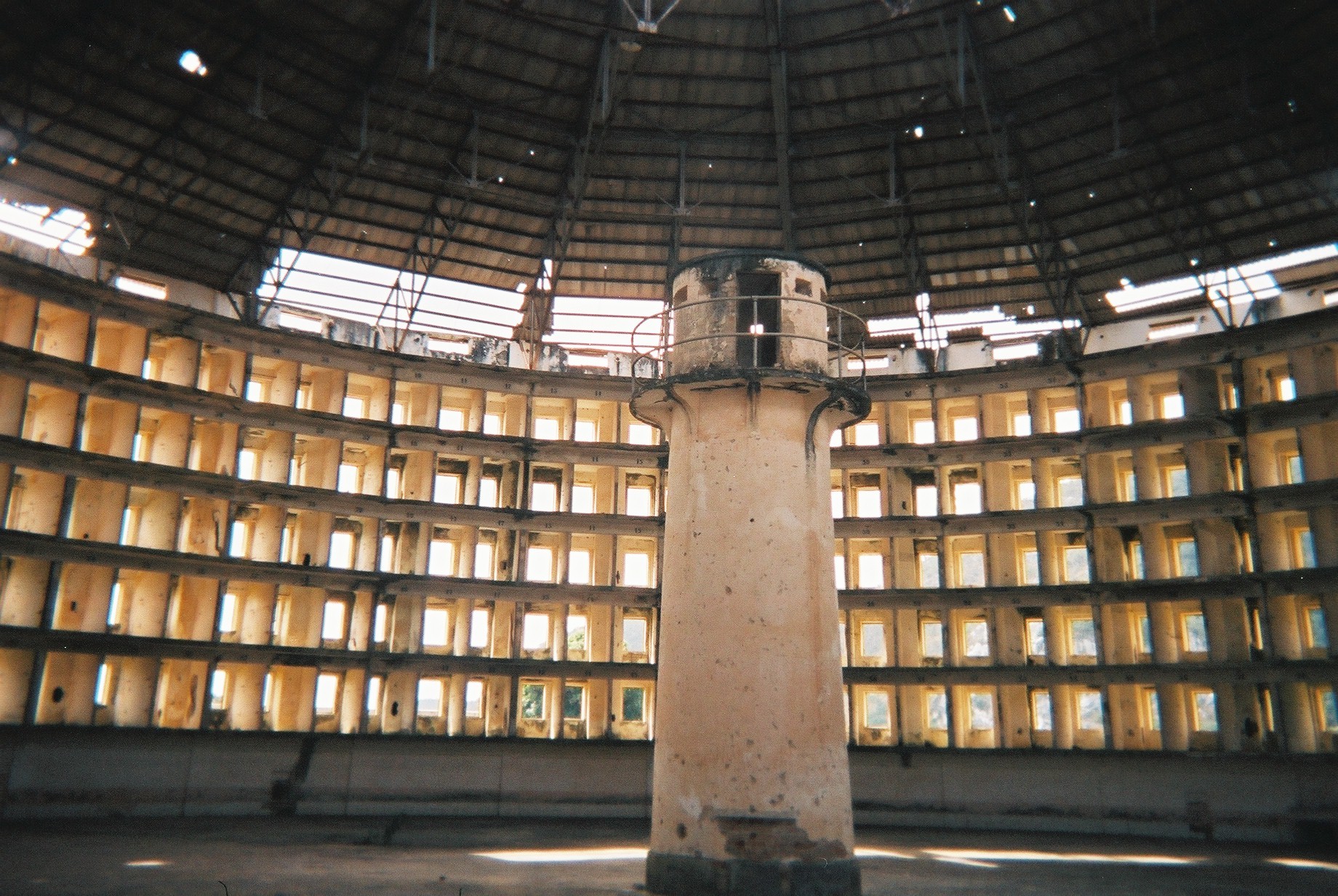
The Global Panopticon

The recent public revelation that the U.S. government is officially tracking everyone via cell phone calls, email, internet activity (certainly blog posts), etc. was not a surprise to me, because I heard about it probably at least a year ago or longer from several different sources.  If I am not mistaken, Alex Jones had on a guest a long time ago who discussed how he was setting up the infrastructure at AT&T for these NSA spying programs.  Gerald Celente mentioned this likelihood over a year ago in his newsletter, Trends Journal

However, at that time if one were to discuss this idea that the government is tracking everything you do, people would look at you like you were literally wearing a tin-foil hat!  No more!  Now it is right out there in the open...but why? 

The mainstream news outlets (in true Pravda fashion) regularly bury or fail to report stories that are embarrassing to the government- but, for reasons we will get into, this story has become ubiquitous.  In other words, you hear about it over, and over, and over.  Of course, the story is framed in such a way to distract from the crucial issue of government surveillance.  The spying is but a subliminal part of the story, while we are to focus on the other, more benign aspects which make for "compelling" entertainment reporting.  The manipulators of public opinion are clearly up to something devious- a subtle propaganda campaign designed to make it a part of public consciousness that everyone, everywhere in the world is being watched.

The effect is similar to what we see from the TSA at airports.  This agency herds people into lines, and gives them a choice to either let a stranger view their naked body or submit to a full pat-down.  What could be more dehumanizing, and humiliating than this degrading act?  The common person says, "Well, I have nothing to hide, so who cares?"  However, the psychological damage has already been done.

 
Presidio Modelo, Isla De la Juventud, Cuba


The open admission that the U.S. government is gathering all data it can possibly acquire domestically and internationally on ordinary people has created a global panopticon.  It is like a constant body scan or pat-down every time someone communicates- we are all now naked before our masters, and we know it.  This moment, the death of privacy, is an important milestone in the march toward tyranny- now everyone in society is aware of the intentions of the regime- total control.

One positive aspect of this shift in consciousness, is that there can be no more denial of the totalitarian intentions of the U.S. government.  No longer should we have to endure the eye-rolling and dismissive attitudes of those who are interested in talking politics only if one stays safely within the John Boehner/Harry Reid paradigm.*  This is the opportunity to open the lid on that box, and guide many people to a new perspective.


*Thanks Tom Woods

Jun 23, 2013

Life is Nasty, Brutish, and Short (When You Serve the State)

Just a thought I had today...

Anyone who has been to the DMV, a courthouse, a TSA checkpoint, or had any contact with any of the various appendages of the government apparatus in it's various forms has probably noticed something about those who are employed there:  Their attitude stinks!  Consider your experience when you patronize a grocery store, a restaurant, etc., and compare the service you receive.  While there are varying degrees of disposition exhibited by workers regardless of their employment in the public or private sector, generally private sector workers are happier.

It is all a matter of who is in control.  The waitstaff at your favorite restaurant greets you with a smile, brings your order promptly, and keeps your glass full because they know your experience will yield benefits both in the short-term (your tip) and in the long-run (your repeat business).  They have a vested interest in your happiness. 

The government employee sees you as a captive* audience, who has no choice in the matter!  There is no incentive-from their standpoint- to serving you.  In fact, you are serving them!  Indeed, should you choose to ignore your "duty" to patronize their institution, you may find yourself at the point of a gun, and in the back of a patrol car.  Is it any wonder why those dull, dreary, and sometimes outright rude employees seem so unhappy?

I say, let's free them from their doldrums by eliminating public sector employment, and allowing individuals to provide law, education, policing, and all of the various important services society desires on a voluntary basis.  The fireman could still be a fireman, a teacher still a teacher, etc., but they would work in a private setting where they would have an incentive to provide excellent service to those who desire their contribution.  Without a doubt, this would benefit both the worker and the customer, and result in a happier and more productive society.


*I mean captive in the literal sense.

Apr 29, 2013

Neo-Con Slamma Jamma

This article by Tom DiLorenzo is a hearty rebuff of the idea that if you critizize the state for the blowback that predictably comes with meddling in the buisiness of other nations, you are blaming "America" for the results.

--Source LRC

Apr 24, 2013

Human Action/Top Daily Articles

I am starting a book by Ludwig von Mises entitled, Human Action.  So far, I am feeling very fond of my search engine (i.e. dictionary), as this book is full of many words I have not ever heard!  I will post updates as I go along.

I am also trying to figure out how I am organizing the blog.  I think I will make a top 5 list every day, or perhaps once a week...we'll see how much time I have!  For now, here's a top 3 for today:


FBI and Tsarneav: What Did They Know and When Did They Know it?


What’s Bad About a House-to-House Search?

Why Libertarianism is so Dangerous


Enjoy!

Apr 15, 2013

Relaunch!

Hello all!

I am finally pulling the trigger on something I have wanted to do for months!  Relaunching Liberty Study!  Woo hoo!  Sorry for the delay, it is not for lack of subject matter- but for lack of time, mostly!  However, I am dedicating myself to getting back in the business of logging my progress through this philosophical journey...

I have tried to cover a wide variety of subjects- such as, war, internet censorship, sound currency, unsound currency, food, scandal, and others- but this is merely a reflection of what others bring to me everyday!  I want to thank LewRockwell.com, TomWoods.com, and Mises.org for all they have done to illuminate various issues in ways that others fall short.

So, look forward for more to come!

May 14, 2012

Palling around

The recent news that J.P. Morgan lost around 2 billion "dollars" in a risky trade deal is abuzz in the media, and within moments of the news breaking anti-capitalists were already sounding the horn for more regulation.  This is likely a Trojan Horse which will only serve the well connected and crush those who don't do things like blow $2 billion on a trade.

As Bob Wenzel points out:

"In the wake of the JPMorgan loss, government officials will babble on about new regulations that will be needed to be put in place to stop banks from doing such trading. But these new regulations will benefit the politically connected at the expense of conservative banks, who do traditional banking. The connected, like Jamie Dimon, will gain even further advantages and opportunities to blow up even more money."  

Indeed, J.P. Morgan will "get by with a little help from their friends."  Chairman Jamie Dimon describes his view of the relationship here:

"In the meantime, the rest of us should hold hands, get together, collaborate, business and government together, to fix the problem.  It's going to be very hard for government to do this on its own.  And business can't do it without collaborating with the government."


With all this palling around, there will be an incentive to take unnatural risks with the availability of cheap loans and implicit guarantees in the case of a failure, and regulations will likely favor (and be written by) the big players.  Bob Wenzel again:


On an even more important note, one has to ask why there aren't any lines outside JPMorgan Chase, since clearly the bank allows blithering econometric modelers to run naked through the bank, with the ability to put billions of depositor/bank money at risk.


The answer is moral hazard. JPMorgan depositors know that the FDIC will back them up, even if there are even greater toxic trading bombs that could go off at the bank .


The FDIC, by backing these firms, serves to prop-up institutions that have made mistakes, and permit them to escape failure unscathed.  The effect of this action on the economy is multiplicative.  The firm itself now knows it will not be punished, stimulating it toward risky behavior in the future (moral hazard).  Also, the firm continues to draw investment- and at a much higher level than if it were allowed to fail.  This diluted and skewed pool of resources mean fewer investors are available for competing firms.  These effects are worse for society in the grand scheme than the ludicrous bill the taxpayers are stuck with in the case of a failure, for the insolvent firms are allowed to continue- promising more, but greater pain (due to an inflated currency) as the financial "bridges to nowhere" carry on.  Thus, too big to fail is a systemic problem that lies at the feet of the FDIC.

Because regulations merely tweak the current system and ignore the moral hazard, the fundamental problems of our economy can never be resolved.  Unless we address the special relationship these firms have with regulators and the government itself, we will only see more regulation designed to crush competition.  Would you lose $2 billion to make $10 billion over a period of time, as your competitors are forced under water by special regulations that were put in place for your "mistake?"  Perhaps this is why depositors are not running away...

The lesson here is that the last century of government intervention and central economic planning has been a dismal failure and is doomed to more of the same.  But, disconnecting government (and, of course, quasi-government institutions) from the financial market is not part of the paradigm our desperate overlords have in mind.  Quoting Edwin Vierra:

"They (the Fed) cannot face the consequences of a depression- can you imagine what a 1930's style depression in this country would be like?  That's what they don't want to have happen, and the one tool that they have that they think can prevent that in the short term is what?  Quantitative easing- inflation, generating money, generating paper currency, bills of credit- well, bills of discredit because they are not going to be paid.  We keep generating this stuff and we hope something will happen.  We are playing for time- financially.  But I think it was Machiavelli that said that's a fallacy because time brings all things- bad as well as good."


Since the current power structure chooses to perpetuate the status quo at all costs, we should consider Vierra's idea of using alternative currencies on the State level.  This way at least the States could provide a bulwark against a corrupt and dangerous system.  Crucially, this action would eliminate the relevance of moral hazard, and, at least, provides a working alternative to a crumbling "dollar":

"...The only solution here, I think, is to come up with an alternative currency- and a lot of people have proposed exactly how to do this.  This isn't something that's difficult, on the shelf technology, we could set this thing up in 30-60 days after the statute is passed- an alternative sound currency based on silver and gold.  Start using that in the marketplace, start transitioning the governments into using it for purposes of taxation and spending, and let the banks figure out how to solve their own problems."  -- Edwin Vierra

May 8, 2012

Willard Worried

In this post on the LewRockwell.com blog, your author is included with some analysis...

May 4, 2012

The Narrative

Listening to NPR a few weeks ago, I made an important realization about the media, and it's (dis)function in providing "the narrative" we revolve our lives around.  The story was that Rick Santorum had dropped out of the presidential race, leaving the republican nomination to Mitt Romney.*  Some examples: hereherehere, and here.  Of course, since there were still two other candidates competing for that prize, one wonders how the news media can make such a statement.

Any significant event is corralled by the news media into an acceptable story for consumption of the American mind.  Or, if needed, an event (or significant portions of the event) can be ignored or under-reported.  In this way, the media is attempting to frame a certain worldview that is sympathetic or even perpetuous of the power of the State.  The official narrative for this presidential race is now that the candidates will be Romney and Obama.


Enjoy your "choice," America!


Neither Romney or Obama will fundamentally challenge the status quo, and are interchangeable.  Indeed, this is a choice between Worse and Worser.  For those of us who would rather avoid this Titanical game of musical chairs, and instead would like a candidate who offers significant change of course, it would be preposterous to consider either of them.  The role of the news media is to create a narrative that achieves a facade of legitimacy whilst ushering in the chosen winner of the contest, and to exclude any stories that may suggest another outcome.


Moving Beyond...


Despite many scholars who have written books, lectured, and even made (limited) media appearances on moving beyond the State, this possibility is never included as part of the narrative.  However-- just as major media networks have become almost fully intermarried into a propaganda mouthpiece of the ruling class-- documentary films, websites, podcasts, and various other conduits have emerged (mostly on the internet) to fill the void for those who crave more, and have provided a nice alternative source of information.  It seems that every action, indeed, causes and equal and opposite reaction.


Benefits


One benefit of the primitive status of the internet is that this venue makes it much more difficult (though not impossible) for you to be intellectually swindled, as it is lacks highly trained teleprompter readers who are beautiful, exquisitely dressed, and professional- telling you how it is.  Contrarily, internet outlets are traditionally seen as unprofessional- with low sound and video quality.  Sometimes, you have to really want the information to sit through an exceedingly inadequate presentation.

However, this is changing as technology advances and becomes more affordable, and as the market for information continues to slide from TV to the internet.  Now, as people are tuning out cable and supporting emerging outlets for information, winners are being chosen- and with their success, they are able to invest in more capital (video and audio equipment) as well as labor (higher quality and/or quantity of staff).  This synergy of interest in the product and professionalism in packaging has led to the internet being the choice of the upcoming generation.


Another advantage the internet has over the traditional media is the ability to link to original sources.  This is an important check on those who would like to take a story out of context.  It is possible, in the comments section, to correct a fact or opinion and reach at least some folks (like myself) who like to see differing viewpoints on a particular subject.  Also, you are able to link to your blog there- perhaps a whole post can be devoted to providing a factual account of the issue at hand.

Clearly, the ability to bring up a document without having the entire room filled with books and magazines, let alone having to remember exactly which issue of which publication it was found in, etc. is an unappreciated example of progress.  The ability to instantly upload and download information spells disaster for those who would want to snuff out particular stories- we are now much less information "impaired."  Although "those who would want to" are not above it!

It is also nice to be able to read a story about something that piques your interest, and be able to find out more details by simply clicking a link.  The internet is an easy place for a person to find many different angles on a particular subject, perhaps even stumbling on opinions that are outside of Tom Wood's Joe Biden/Mitt Romney Box of Allowed Political Dogma.  As the dinosaur media loses it's traditional audience to old age, and the current crop to irrelevancy,  the narrative- which is the fancy wrapping paper on the box of permitted opinion- will be crushed and burned with it.  This process of intellectual liberation, already in progress, is a great benefit to humanity.


*Update 5/7:

I found a map of the delegates so far, and it would appear the media has, indeed, created a narrative that is not based in reality:

Link to map
May 3, 2012

The CIA as The State

In this interview, Peter Janney talks to Lew Rockwell about his book: Mary's Mosaic: The CIA Conspiracy to Murder John F. Kennedy, Mary Pinchot Meyer, and Their Vision of World Peace.  Peter's book details how Mary Pinochet Meyer, a pacifist, had a great influence on Kennedy as he gained the Presidency.  The book also details the cover-up of her assassination, as well as the characters involved in that plot.

Janney contends that Kennedy's philosophy of pacifism was antithetical to the CIA's vision of world dominance, and because of JFK's threat to "shatter the agency into a thousand pieces," the president had to be assassinated to protect the country from a threat they felt he didn't understand or take seriously enough.  This coup de tat represented a fundamental shift in governance.  Most interestingly, Janney paints a picture of a CIA with ever expanding influence, to the point where they have unilateral control on society:

@21:07

"Of course, no one knew how about bad it was until Watergate.  It was really at the time of the Watergate era that people began to wake up and realize, 'My god, the CIA has been acting unilaterally, as if it was it's own country.  There aren't any checks and balances here.  They lie all the time to us in terms of any raining in on the part of congress.'  And so, all the sudden, after Watergate, it became very fashionable to, in a sense, disassociate oneself from the CIA."

Later, Rockwell asked, "Is the CIA much worse today?  Is the American government in a sense the U.S. of the CIA?..."

@23:49

"This is a huge conflict, because every nation state has the right to collect intelligence as a way to protect itself.  And so, you have to step back and look clearly at what the limits of that can be.  If you are going to get into the arena where state sponsored murder is okay, then I think you've crossed the line where there is no more democracy.*  There's basically a plutocracy or an oligarchy that wants to stay in control by any means necessary."

As "National Security" gained increasing prominence in the role of foreign and domestic policy, we began to see the results in the form of CIA assassinations and coups worldwide,  This control quickly turned inward, begetting illegal wiretapping and spying on citizens at home, and assassinations of politicians and activist leaders domestically.  All of these despicable actions were performed on a unilateral basis, with no authority or oversight.  Any part of government is subject to corruption- and the National Security apparatus acted in the interests of a power oligarchy hell-bent on domination of the world at any cost.

Confronting this reality is both difficult and prescient- as we have watched the liberties we have cherished dissolve in the post-9/11 atmosphere.  The National Security State, where you are guilty until proven innocent and dissent is viewed as dangerous, is the ultimate end for those who would like total control over society.  Clearly, dismantling this apparatus is crucial to restoring liberty and rule of law in society.


*  I am not sure why he uses the word "democracy" here.  We were founded as a republic, but many progressives desire democracy- and use the word to describe our political order.  That said, I would agree that in the last century we have regressed to more of a democracy.  This is unfortunate, as the following video shows, and the results are the predicable outcome of oligarchy that Janney describes above:


Apr 9, 2012

Primal Prepping

In a recent interview with Lisa Bedford (Survival Mom), Lew Rockwell posed a question about prepping for those who choose a primal lifestyle.  There is, indeed, a perception that building a reserve of storable food and primalism must be mutually exclusive.  Fortunately, there are many options available for those who want to thrive in any scenario, sans cream of wheat.


When considering dry food to store, one can come up with quite a few choices:

Dried Mushrooms
Kale Chips (dehydrated kale)
Basically any dehydrated veggies
Jerky
Canned Fish/Seafood (choose wisely- low mercury, high omega-3)
Seeds (including chia and/or hemp)
Nuts
Oils (especially coconut and olive)
Ghee (clarified butter)
Pre-cooked Bacon (nitrate-free)

When shopping for these items, pay attention especially to packaging- choose products with solid color containers, as light tends to diminish the shelf life of a product.  Look for the newest product by examining all of the "sell by" dates on the back of the package.  Most importantly, make these items a part of your everyday regimen.  This will allow you to keep rotating in fresh product, with the added benefit of avoiding the experience of shock as you start realizing you are going to be eating an MRE for dinner tonight- and many nights to come...You will, instead, be snacking!

As for fresh food, a garden is a fun, low-cost insurance policy against the ultimate deal-breaker: hunger.  Another option is container gardening.  Especially in an urban scenario, one may find it handy for valuable food to be somewhat portable.


Also, what could be more primal than hunting and fishing?  Wild game is one of the most rewarding and healthy choices for the human body- a body that will desperately need the "fuel" it receives from such pursuits.  Getting up to speed on the techniques involved, as well as acquiring the equipment needed to achieve such ends is an obvious choice for the primal prepper.  


On this note, one has to consider the philosophical and practical merits of primal hunting and fishing tactics vs. modern methods and technologies.  While a gun is more efficient than a bow, primal tactics are more stealthy- meaning a much lower chance that other hunters will notice your kill.  Fishing is an incognito, and potentially abundant, source of wild meat.  

Foraging for wild food is another essential skill for the prepping primalist.  Setting yourself up with someone from your area who can expertly identify native wild edibles is a must, as is practice.  Uninformed choices could lead to severe illness or death, therefore hands-on knowledge is the superior choice when it comes to orienting yourself to the edible plants in your area.  Although some species are poisonous to varying degrees, a potential bounty of edible wild food exists- if you know how to identify, prepare, and store it.   Ironically, most people, driven mad with hunger, will be scurrying around within a natural buffet attempting to find something, anything, they recognize as food.  Primal foraging skills will put you ahead of the pack- potentially keeping you safe from starvation, and droves of starving lunatics!

When considering how to store all of these items, keep in mind you will need them to be within easy access, yet hidden from jealous eyes.  Mother Earth News has a nice article about building a basement root cellar, which satisfies both needs.  Dehydrating or canning fresh meat and wild foraged food can extend your harvest during plentiful times to prepare for occasions when it is impossible to hunt.

If you are forced from your home, a shallow hole in the ground covered by a rock or heavy log may have to suffice.  However, in this scenario, you are likely better served spending your calories foraging or hunting.  Primal hunting and foraging skills are best learned beforehand.  If you have to make a hasty retreat, you will be very happy you have these tools immediately at your disposal.

Thinking about the primal diet, one tends to daydream about what life must have been like for our ancient ancestors.  "Prepping"- as we call it- was the lifestyle of those who came before us.  They had to constantly provide for, at a minimum, their fundamental needs without modern "conveniences" such as supermarkets, electronic gadgets, and refrigeration.  Imagine what they would have given for something as simple as a knife!


When one considers the ultimate end to many of the scenarios we prep for, it is easy to imagine how "primal" it will actually get when simple things like power failure occur, and life for us all rapidly and dramatically changes.  For instance, what will people do when they cannot bake bread?  As a primalist, do you remember what you thought and how you felt when you imagined- gasp!- not eating grains?  


When the power goes out, people will be forced into a more primal diet by necessity- and most will not be prepared with the literal and mental primal "tools" to survive without resorting to immoral and malicious activities.  Indeed, one cannot imagine a worse place to be in a societal collapse, than in an urban area with ubiquitous panic and despair- and craving for baked goods, an underestimated threat.  By already having your body and mind tuned in to this mode of thinking- you can separate yourself above the rest, and dramatically improve your chance of survival.  The primal lifestyle is, in fact, intertwined with the prepper lifestyle.

Apr 6, 2012

Thomas Woods on War

Jeffery Tucker interviews Tom Woods


In the above interview, Tom Woods discusses his book: We Who Dared to Say No to War: American Antiwar Writing from 1812 to Now.  The book, co-edited with Murray Pulner, is a review of anti-war writings from many different political perspectives.

From the interview:

@10:03
"What I want this book to show is just that the propaganda surrounding war has been there in every one of these wars- and it's the same propaganda...at this point, how many times can your intelligence be insulted?- and that these things are atrocities.  Yes, the minimum wage is bad.  Tariffs are bad.  But, this is an unbelievable atrocity that goes on- on behalf of intentions that are usually very murky, and not made clear to the people.  The people are given propagandistic reasons for the war, but the fact is- this makes us callous.  This "public policy" makes us callous toward our fellow man- this makes us think of them as not even being fellow human beings.

When you argue with some of the proponents of these wars, you say, 'Look, you know, a million people died!  A million people were burned to death, with a chemical agent...what do you say to that?'  And they say, 'Hey, you know, it's war...that's war.'  And that's their argument!  They think that's an argument: 'That's war...'  So it gets back to, they utter a word.  And they think that by uttering this word, we can suspend all moral considerations- that you are a left-wing pansy if you even have moral concerns, moral qualms.  This has just gotta stop!  People gotta just stop thinking like this!"

@12:12
"There is something about the human mind that just latches on to this way of thinking.  I myself was caught-up in it for a long time, until-finally-with that first Persian Gulf war...and I saw tens or hundreds of thousands of retreating Iraqi soldiers.  And, yes, they are soldiers, but they are human beings.  They have kids.  And alot of these people themselves, they're kids too.  They don't even want to be there, half of them, and they're maimed or killed- and they are retreating- or being burned alive.  And, meanwhile, we've got our yellow ribbins and our Bob Hope specials...and I just finally said, 'I don't know if I can do this anymore.  I don't know how I can celebrate and have a parade, when these people are mourning the deaths of countless people who never did anything to us, and who had nothing to do with us, who would not hurt us in any way because of the imperial ambition of some U.S. president.  You've gotta be kidding me if you are going to support that!"


I highly anticipate adding this book to my collection...

Feb 19, 2012

Thomas Woods on State Nullification

Thomas Woods speaks to Sheriff's 
Officers about state nullification

Thomas Woods (bio) recently gave a speech to the Constitutional Sheriffs and Peace Officers Association about state nullification.  Dr. Woods is author of a recent book Nullification, which deals with this tricky subject.  I plan on posting a review when when I have finished reading it.

The video above is a short and basic introduction to the concepts involved, with the typical Woods style that I love.  He provides a window to the paradigm of many of our nation's great thinkers.  This was a very entertaining video, and interesting subject of paramount importance throughout our history.

Feb 4, 2012

Sopa/Pipa and Music

Khan Acadamy explains SOPA/PIPA


The recent squabble about the Stop Online Piracy Act (SOPA) and it's sister bill in the senate- Preventing Real Online Threats to Economic Creativity and Theft of Intellectual Property Act (PIPA) have me thinking of an old discussion my musician friends and I would have.  In discussing the issue of pirating music, a few of us came to the conclusion that the technological revolution that we have experienced has complicated the situation in several respects.

Consider a fruit vendor:  If the vendor sells you an apple, he can no longer possess that apple to sell to another customer.  If the vendor instead wants to sell (or simply share) a music file, however, he has access to an unlimited basket of product.  Furthermore, the consumer can then copy the file, and give it away ad infinitum without degrading in any way the original or any of the copies.  Acknowledgement of this dilemma between tangible goods (apple) and intangible goods (data) requires a different approach in seeking justice.

Prior to recorded music, the only was to experience music was to be present as it occurred.  Therefore, supply was dictated primarily by your culture- what it had to offer musically, and how significant music is in cultural daily life- and not by the listener.  As recorded music (not to mention photos and video*) became prevalent, people were able to experience music on demand, and with trade and travel- music from other cultures.  This was a substantial change in the culture of music itself, begetting a fount of creativity, and a population of listeners who could capture that creativity to enjoy at their leisure.

As we have transitioned from analog to digitally recorded music, we have made another important cultural shift.   Recorded music has been transformed into data which has modified the listening experience in several ways.  With MP3 players- users can upload massive amounts of data, listening to one song from this band and two or three of that band at the touch of a button!  This is pretty far removed from simple recorded music, and especially differs from experiencing a live performance.

Another difference is the way the music is delivered itself.  In making digital music, much of the musical information is lost- an example being a cymbal crash being cut in half to reduce file size at the expense of losing some resonance at the end of the crash that most people won't miss.  In a live performance, these nuances are quite present for the experienced listener- but even the most unaware will experience the larger spectrum in a rich environment of tonal colors.

So, a recording is to a live performance as a "home movie" is to a live experience.  The result is always a copy, most times- a copy of a copy, and with the digital revolution- a modified copy of a copy!  Considering MP3s have turned the recordings into data, yet another barrier has been placed between the listener and the music itself.  Regardless of the final quality (in terms of the musical experience) of the data file, the issue at hand is who "owns" this information, which is- in reality- a computer file.

The industry proponents of SOPA/PIPA would like to cap this wellspring of information, and ration it out to only those who pay them for access to it.  It is analogous to the idea of the energy industry suppressing free energy devices- knowing that if everyone had access to unlimited amounts of free energy, a massive amount of potential profit would be lost.  Of course, the benefit to the average person would be enormous considering the money saved each month and the inestimable potential for progress as human beings (not to mention the avoidance of war, which always seems to revolve around control of resources).  At least the suppression of free energy allows producers to supply a tangible good (oil, coal, etc.).  Because the controllers are working with immaterial goods (data)- a ban on free information has no basis in reality.  Efforts to suppress information create no new goods for the world, they are merely trying to control who is allowed to make the copies!

The overarching theme of these moves to quash the desires and potentialities of humans is the use of the State apparatus- for this is the institution with a monopoly on the use of force in contemporary society.  Without the State, the covetous rulers of society would have be powerless to control (and thus, profit) from aspects of human existence that could (and therefore, should) be as free as the air we breathe.  This is another reason to reject the empowerment of the State, and return individuals as the masters of their domain.


*Note: Consider also photographs:  How many people were inspired to create based on a photograph- which encapsulated the experience of seeing something or being somewhere- who would have never created painting X or song X otherwise?

P.S.  Check out this article with Neil Young talking about the same issue...

Dec 26, 2011

Milkman Update

"There is no power greater than the power over money- the power to create and contract the money supply, the power to control the purchasing power of your money.  Throughout history, this has proven to be the most sought after, monopolistic power of man." 
--Ron Paul 1983


I recently was reminded of a debate between Ron Paul and Charles Partee, a member of the Federal Reserve Board of Governors from way back in 1983.  In it, Paul uses the same analogy I did in this post:

@0:27 (in the above snippet)

"...I see the issue of power and control over money to be something that we cannot ignore-we must address.  I believe closely associated with this is the issue of morality, as well.  By what moral right do we have to create purchasing power out of thin air?  Whether it's done by the creation of credit and federal reserve notes- or it's done by the creation of SDR's on an international scope, by what right do they do this?  Is it any more moral to dilute the value of the money supply that you hold in your wallet than it is for the farmer to dilute the milk supply with water?  I would say there is an issue of morality here just as strong as the issue of power.  I happen to believe, also, that because it's a moral issue more than an economic issue- it is for this reason that people have lost trust in the government, trust in the banks, trust in business, trust in themselves- and that we are a nation of distrust."

I knew I had "jacked" that milkman analogy from somewhere, just couldn't remember where!  Turns out is was Ron Paul!  

I watched the entire debate between Paul and Partee a long time ago.  I remember it being very interesting and educational.  The video quality is certified poor, but it is worth fighting through it, trust me!  Here is the debate in it's entirety:

1 of 7


2 of 7


3 of 7


4 of 7


5 of 7


6 of 7


7 of 7 (Can't get this one to load to the blog for some reason...)

Dec 22, 2011

What About Money Causes Economic Crisis?


The above video is the third and final installment of a series of lectures by the office of Congressman Ron Paul about money.  In this video, Peter Schiff analyses what about money causes economic crisis.  He gives both analysis, and personal stories that highlight this phenomenon in a way that, perhaps, many have not considered.  One of my favorite parts is when he gives some perspective on unemployment:

@40:48- Question:  "Can you talk for a minute about your views on unemployment insurance?..."

"Obviously there is an economic truism that you are going to get more of what you subsidize.  I mean, if you are going to pay people not to work, people are going to take you up on it.  I did it myself!  I remember the one time in my life I collected unemployment benefits, I did not look for a job until I exhausted my benefits...There are a lot of people who do the same thing today.  It's not wrong, it's human nature...People forget that leisure has value.  People would rather not work.  People save up so they can retire.  Well, you can retire early now on unemployment."


"A lot of people say 'That's ridiculous- it's only $300/week...'  True!  Yeah, if somebody offered an unemployed person a $100,000/year job, they'd probably take it.  But, what if the only job they're offered is $400/week?  Or $500/week?  Most people won't take it!  They'd rather have unemployment, because it's like a huge tax on getting a job.  The highest marginal tax bracket is faced by someone who is getting unemployment...Not only does he have to pay taxes on what he earns, but he loses all of his unemployment benefits.  So the tax rate is enormous."


"And, of course, people forget when you get a job, you don't get to keep all your income- there's a lot of expenses that the IRS won't let you deduct.  What if the job you get offered is 45 minutes away from your house?  What's it going to cost you in gas money to get there and back?  Maybe you have to eat in a restaurant, maybe you have to wear a suit, maybe you have to have a dry cleaner.  Maybe you have a kid.  What if you have to put your kid in daycare- how much is that going to cost?  So, it's so much easier just not to work.

Previous lectures in the series can be found embedded in these posts:
Lecture #1- Fiat Currency and the Milkman
Lecture #2- What is Constitutional Money?

After watching these talks, I have come away with a much greater understanding of where we are, where we have been, and what we face.  It is well worth the time spent to educate ourselves of these issues- as the money issue has a profound effect on our daily lives, and the nature of society.  I think after you watch this series, the impact of the monetary issue on our liberty will become quite clear.

Two Minute Case for Ron Paul


This is an excellent video by Tom Woods for Ron Paul.  I think he puts it very well:

@ 0:13
"...and he's opposed every bailout- every time.  The other major Republican candidates were all in favor of TARP- which means that when the chips are down, they are going to side with the establishment against you."


@ 0:30
"In 2001, he predicted the financial crisis of 2008- to a T.  We need somebody like this- with his intelligence and insight- to navigate us through a world historic moment like this- not some "empty suit" repeating talking points from 1983."


@ 1:07
"We've been duped into supporting a foreign policy that no "real" Republican worth his salt should be supporting- it's bankrupting the country, and obviously diminishing our strategic position.  And, that's why Ron Paul gets more donations from active duty military than all other Republican candidates combined."


I liked it!

Dec 10, 2011

Gary Weiss- Phony Progressive, Closet Fascist

"Just here to help...Where were your
huddled masses, again?"


recent article in Salon by Gary Weiss claims that Ron Paul is a "fraudulent populist, friend of the oligarchy, sworn enemy of every social program since Theodore Roosevelt."  This claim that "social programs" are populist- and, therefore, helpful to the poor is a common cry we hear from so-called progressives.  But let's think this position through.

Reading through the article, one notices that Weiss uses, as Tom Woods puts it, "one sentence arguments- 'Hey, he wants to get rid of this...Hey!  He wants to get rid of that.'"  Weiss never actually defends these government programs- it is just presumed (with the depth of thought analogous to a puddle) that all these organizations are crucial to common folk.  Of course, the effect of all of these programs has been to the extreme detriment of the working class- or in contemporary terms, the 99%.  To gain a full understanding of how this is so, one has to delve just slightly beyond the name of the agency- something that Weiss is unwilling to do.

Moreover, Weiss treats Paul's opposition to the warfare state and the Federal Reserve as if these positions are just cutesy-patootsy- just no big deal. These cliques are perhaps the most crucial threats to the poor and middle class that progressives so often claim they are trying to ameliorate!  Who else "since Roosevelt" has had the courage to make a stand on these issues?  To ignore this is an extreme disservice to progressives.  Giving these positions more than just a dismissal could, perhaps, persuade progressives towards Paul- who clearly is a friend of the common man.

However, Weiss commits what is either a sin of omission, or perhaps just a transgression of ignorance.  By blindly supporting these agencies of the executive (HUD, Commerce, Interior, Education, and Energy) he reveals himself as a fascist.  As Lew Rockwell has recently said "There isn't anyone around who is willing to stand around today and say, 'I'm a fascist.  I think fascism is a great economic and political system.'  But I submit if they were really honest, the vast majority of politicians, intellectuals, and political activists would have to say just that.  Fascism is the system of government that cartelizes the private sector, centrally plans the economy to  subsidize producers, exalts the police state as the source of order, denies fundamental rights and liberties to individuals, and makes the executive state the unlimited master of society."  Perhaps this is his "coming out"- although browsing through his page on Slate makes me think it is not so.

What is most insidious about the "logic" Weiss applies in this article is that common people are so easily persuaded by this siren song.  Who wouldn't want to get preferential treatment by the government?  After all, it is the Department of Housing and Urban Development.  However, this agency is about as beneficial to common urban folk as the Patriot Act is to true patriots- you know, the sort of folk who might speak out about the Police State- only to be "disappeared" in the name of national security.  The true beneficiaries of these programs is the oligarchy that Weiss so vehemently opposes.

Tom Woods has put together a resource page with links to studies confirming that these agencies are nothing more than an institutionalization of subsidies (at our expense) to well-connected people and organizations.  The amount of money handed over in the name of "progress" is staggering.  Just looking at the corruption in HUD is conclusive that these agencies are solely designed to perpetuate the nexus between those in government power, and their comrades in the (so-called) private sector.

As Rockwell points out, these executive agencies seem so innocuous because we have come to expect fascism as the normal order of business:  "This describes mainstream politics in America today...In fact, it's so much a part of the mainstream, it's hardly noticed anymore."  Indeed- either Weiss hasn't noticed, or is simply disguising his fascist tenancies as "progressive."  What a box to find one's self in- he is either ignorant, and not a true "intellectual," or there is something far more Machiavellian going on here.

Dec 8, 2011

Bravo Raw Milk Moms!

In your face, FDA!

The Raw Milk Freedom Riders will be hosting another event today (Dec. 8), taking raw milk from a farm in Wisconsin to Chicago, and then consuming said product openly.  Here is their press release.  A bold statement from that release:


Chicago, IL—On Thursday, December 8, a group of mothers will risk arrest and other penalties by purchasing fresh, unprocessed milk from a small farm in Wisconsin, transporting it to Chicago’s Independence Park and distributing the milk to other mothers who need it for their families from 11:30am-2:00pm.


Why should such a seemingly innocent act risk arrest? Federal law 21 CFR § 1240.61 prohibits interstate movement and distribution of raw milk for human consumption. This U.S. Food and Drug Administration (FDA) regulation applies to individuals, or “agents” acting on their behalf. The mothers who purchase the milk will be acting as “agents” on behalf of other mothers who cannot make the trip.


Here the "Moms" let it be known that they are fully aware of the legalities and possible punishment involved in such an act.  Yet, they are not dismayed...such bravery!  When consumers truly desire a product, they will seek it out even if it means participating in the "black market."


Raw milk?...Let me check
the other side!

I have spoken to several women in my job who have been driven underground to get their raw milk, due to state law prohibiting the sale of such product in stores here in Kansas.  One described how she meets her "dealer" in an unspecified location- where he gives her the "good stuff" and she pays him there on the street.  What a joke!  She should be able to buy this in our store, but endless regulations keep us from being able to satisfy our customers.

On that note, I have requests from customers (usually those I have never seen) about once a month inquiring about raw milk.  I tell them state law prohibits the sale of this product in stores- to which they almost always roll their eyes and shake their head.  Of course, I always follow that up with the suggestion that the government is "just trying to keep you safe...from yourself!"  Almost always- in a hushed tone like they are trying to solicit drugs- they then ask me, "Do you know where I can get some?"  "No", I tell them- and that they should seek out a local farmer who would be willing to sell them the milk.  I never see these customers again.

If we did carry raw milk, we would in all likelihood have a new regular customer- the best type of patron one could hope for.  Why does the government prohibit us from selling this product?  There is a growing market out there for raw milk and we are not being allowed to capitalize on it.  What a shame!

Dec 7, 2011

The Clinton Chronicles


Damn it feels good to be a gangsta...

The Clinton Chronicles was an interesting documentary to watch, and a perfect sequel to one of the films on Iran/Contra.  This film brings many Bill Clinton's (former) associates together to paint a picture of what this man's role in the aforementioned scandal likely was- a powerful, well-connected, and corrupt political leader who would facilitate the drug running and money laundering aspect of this "secret government" plot.

Many people connected to Clinton- former bodyguards, girlfriends, and even those involved in Iran/Contra- bravely came forward to share what they knew of this plot.  Many died in bizarre ways- those more fortunate saw their careers ruined, and their lawsuits sabotaged.  For an example, see this statement (a must read to understand legal sabotage) released in 1996 by Terry Reed, a pilot who worked for the CIA during Iran/Contra.

Or, you could just check out these lyrics from the Ghetto Boys on an album released election day 1992:

And now, a word from the president! 
Damn it feels good to be a gangsta 
Gettin voted into the white house 
Everything lookin good to the people of the world 
But the mafia family is my boss 
So every now and then I owe a favor gettin' down 
Like lettin' a big drug shipment through 
And send 'em to the poor community 
So we can bust you know who 
So voters of the world keep supportin' me 
And I promise to take you very far 
Other leaders better not upset me 
Or I'll send a million troops to die at war 
To all you republicans, that helped me win 
I sincerely like to thank you 
'cause now I got the world swingin' from my nuts 
And damn it feels good to be a gangsta

--From Ghetto Boys Uncut Dope: Ghetto Boys Best  Released November 3, 1992

Dec 5, 2011

Iran/Contra

Hold on guys...I think we forgot to recite 
the Pledge of Allegiance

I have watched a few documentary films on the Iran/Contra affair recently.  As I was born in 1980, this was all being brought to public light when I was just a small child.  In light of the activities the government was engaging in, it surprises me that more of the people from my parents generation are not completely and totally suspicious of all of our "foreign policy" programs.

These unscrupulous and illegal activities are all based on the "National Security Act of 1947 (NSA'47), which established the National Security Counsel and the Central Intelligence Agency.  Both of these organizations- while intended to be a buffer against foreign threats- have caused incredible havoc on other nations.  When the government pursues such a course, it (predictably) causes what the CIA calls "blowback" or retaliation.

Just supporting my country...

In these documentaries, various people- mostly Oliver North- proudly justified blatant illegal activities such as drug running, arms running, circumventing and lying to Congress as a defense of our nation against the "Communist Threat."  This, of course, all goes back to NSA'47- and the priority of "national defense."  Does this make our drug addicts de facto Super Patriots?


The Secret Government- Bill Moyers PBS
The Iran/Contra Coverup

There is a third documentary I would like to watch called The Clinton Chronicals, which is supposed to be about the connection of former President Bill Clinton, and his role in the affair.  I have yet to watch it, and will post an update when I get a chance to view it.

Thanks to Charles Burris who's post on Lew Rockwell's site inspired the interest in this subject for me.